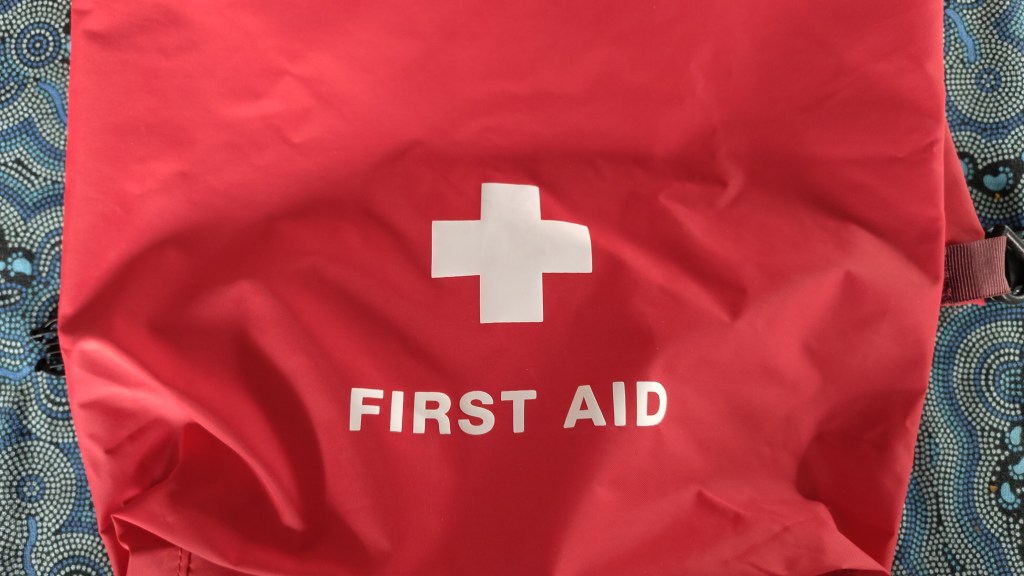
It’s time to be organized about first aid. There is no “one kit fits all”. It depends on the length of time it may be needed, the distance to pharmacies that are open, ease of making it to a hospital with/without calling the Rega, the type of risk inherent in the activity and the number of people. This is a first try at being systematic and to create something that will make it easier next time.
A first-aid kit needs to be reviewed every time before you set out, preferably a couple of days before the stress of last-minute final packing sets in. It also gives time to buy missing items and to let your subconscious review your decisions. This is a good overview page: mountainmedicine .
Why is it so difficult? I guess because planning for unhappy events and balancing impact&probability against weight&size takes a lot of brain power. It gets overwhelming.
There are very nice first-aid containers to be had:
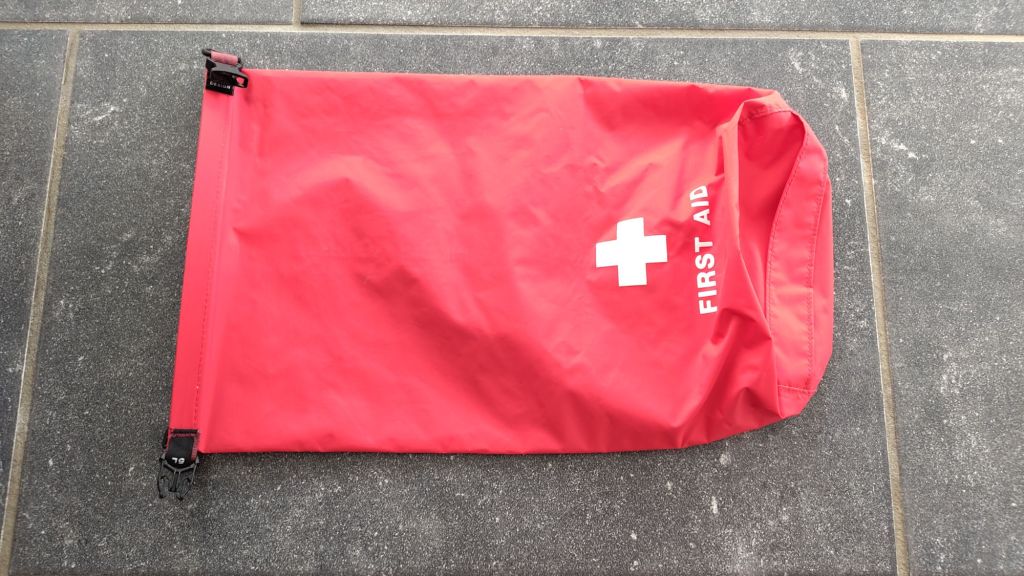
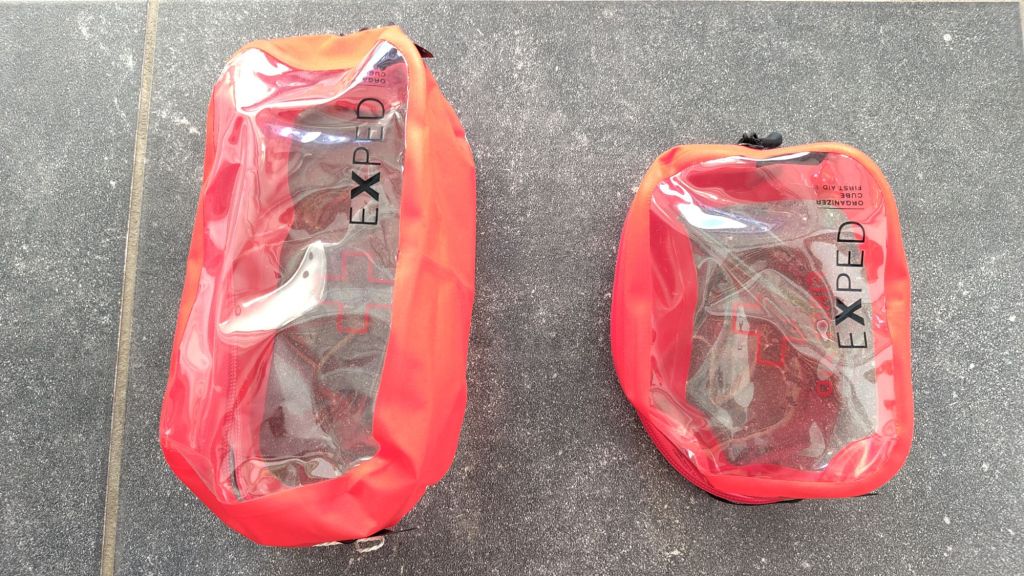
They don’t come with a list because of liability issues. It is also important to indicate the use and dosage of the medicine. What if we used icons to describe the issue that is being treated and made little pockets for the medicine to treat it? Let’s give it a try.
A first First Aid Kit for four people hiking hut to hut between 1800 and 2400m for 3 nights. There will probably be some medical support at the huts, in contrast to when we camp at this altitude. Parts will be steep with loose rocks.
- First Aid Kit:
- Pain management:
- Joint inflammation, toothache: Ibuprofen
- General pain, fever: Paracetamol
- My headaches: Aspirin
- Contusion: Diclofenac Voltaren
- Medication
- Allergies: antihistamine, nose spray
- Sleeping problems: melatonin
- Digestive troubles: immodium
- Bladder infection: Monuril 3
- Yeast infection: Candida antifungal cream
- Nausea: Motilium or Itinerol
- Flesh, Tendons and Bone Wounds
- Itch: Oma cream – Nestosyl
- Blisters: Compeed – how many?
- Wound: Disinfectant cream/fluid
- Stop minor cut: Bandaids large and small
- Stop minor bleeding: Wound dressing, Elastoplast tape/medical tape
- Stop medium blood loss: coagulant bandage
- Stop major blood loss: tourniquet, Israeli bandage
- Treat burns:
- Stabilize twisted knee or ankle: compression bandage
- Hardware
- Cutting bandages: Scissors
- Removing ticks: Tweezers
- Seeing in the dark: Flashlight with full batteries
- Signalling for help: Whistle
- Survival bag?
- Knife: it’s a cute, very sharp ceramic one
- Pain management:
I put together three kits: small, medium and large:
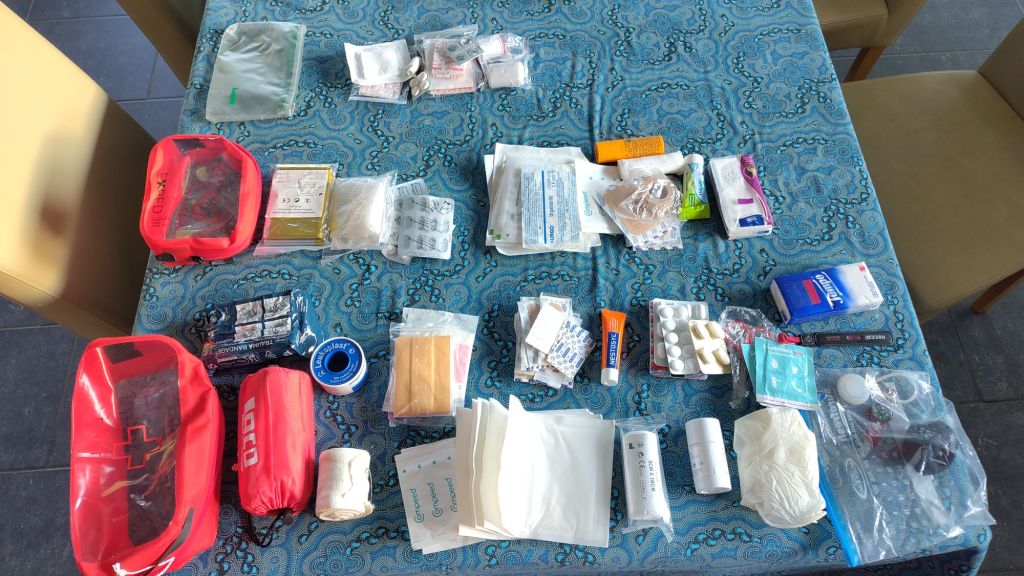
Let’s see if it fits. A couple of items (antihistamine!) are still missing – I’ll get them tomorrow.
This is the reverse approach: have container, fill it to the max. (So much for being systematic.)
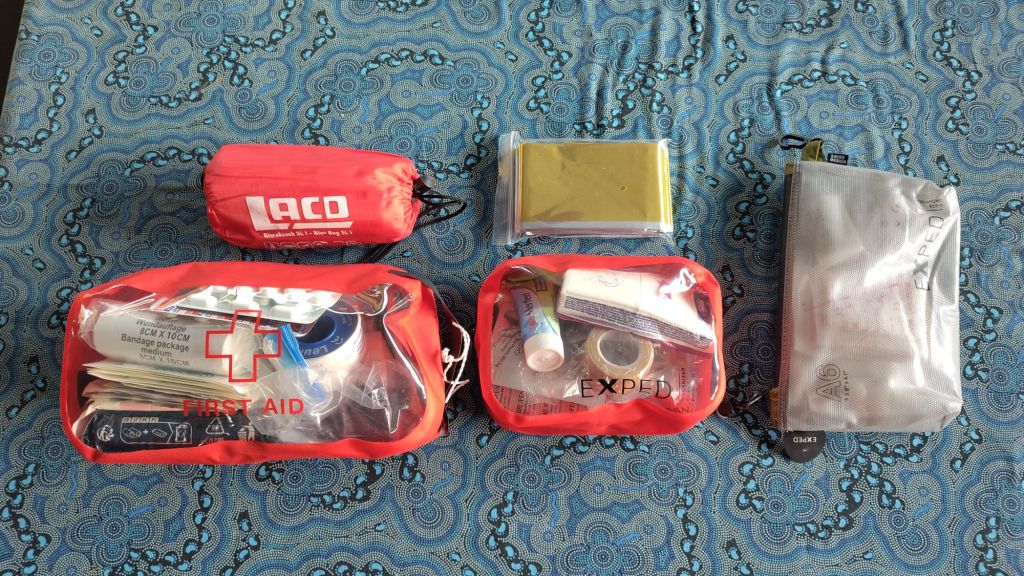
They weigh 500, 200 and 50 grams, without the emergency bivvy/blanket. This would do, keeping the contents waterproof. But it’s all jumbled together. Tomorrow I’ll think about how to keep it organized with bespoke dyneema baggies.
Early morning philosophizing: are emergency bivvys/blankets part of the first aid kit, or part of the “shelter” kit? What about nail clippers? Part of the “personal hygiene” kit? What if you’re on a daytrip and break a nail? And sunscreen? That’s normal procedure. It should be applied repeatedly during the day and thus be within easy reach. So not a “fix something to reduce discomfort” thing. Whistles? That’s an emergency thing. Good thing I bought a couple. If only I could find them.
I can feel it happening again: the kit is more or less prepared. Finding or buying the last couple of things will drown in the last-minute packing and that will be the thing we need.
We’ll be walking for 4 days on steep, uneven terrain. The chance of blisters is high, and two each won’t be enough. Better bring more of those too.
 Cool and Interesting
Leave a comment