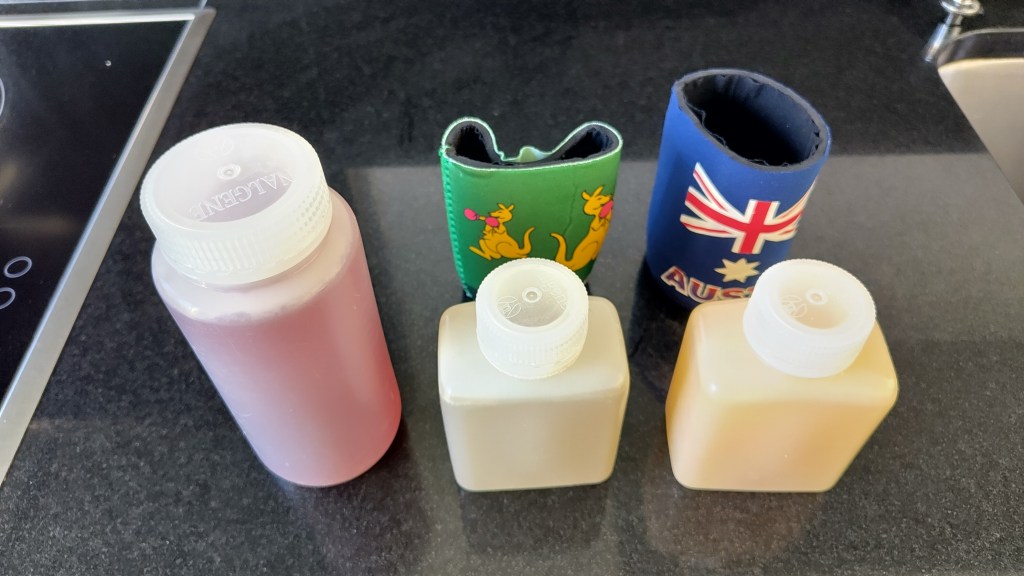
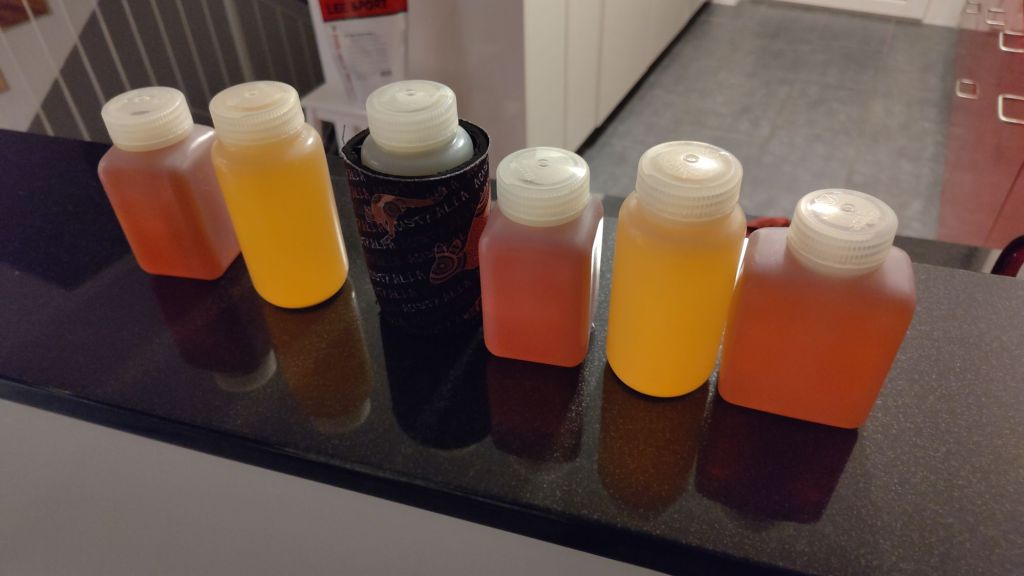
This is what I brought on my last 1300m vertical race: 250ml nalgene bottles of: maltodextrin, electrolytes, chicken soup, maltodextrin, electrolytes, maltodextrin. I drank a little more than half of it.
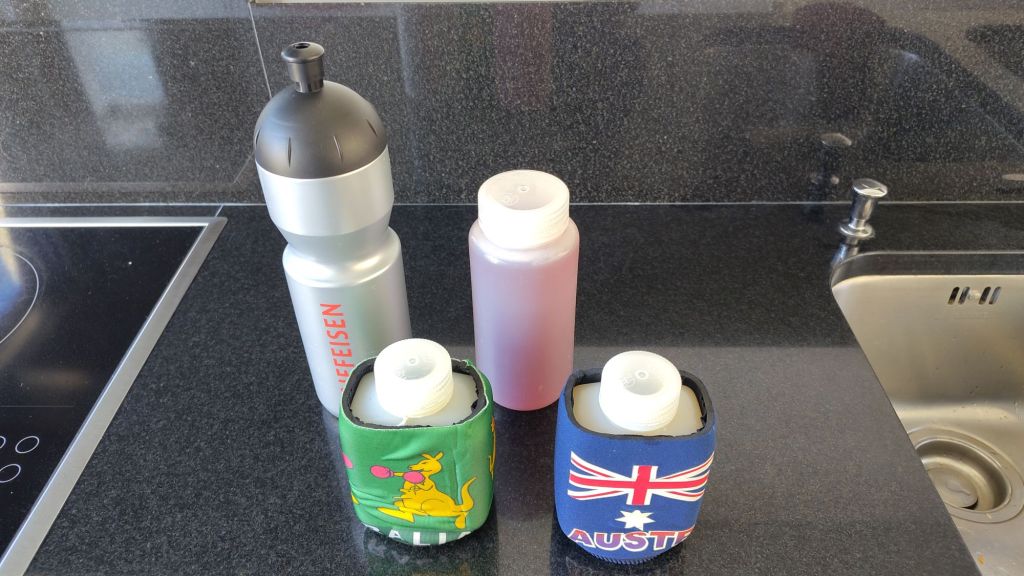
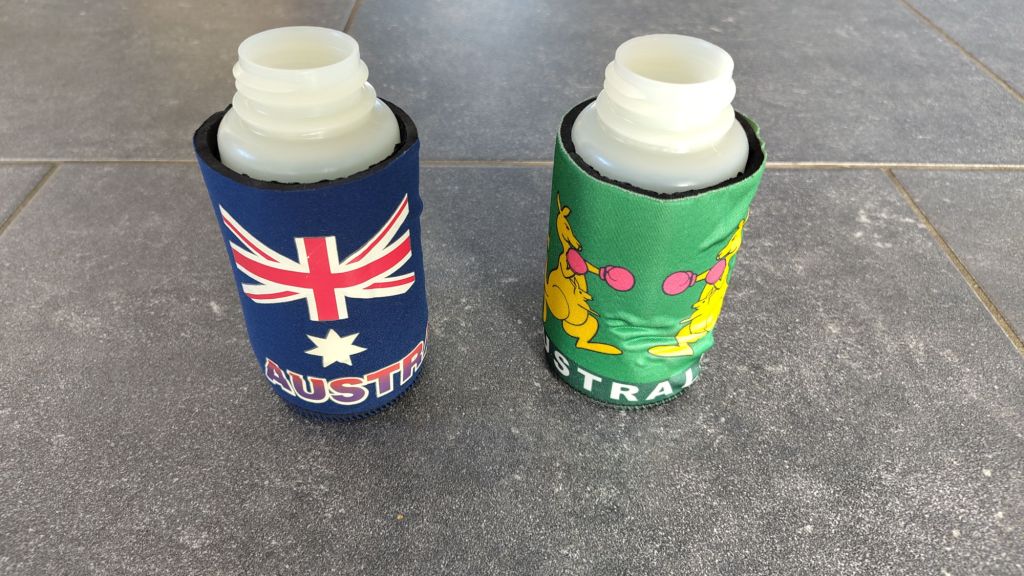
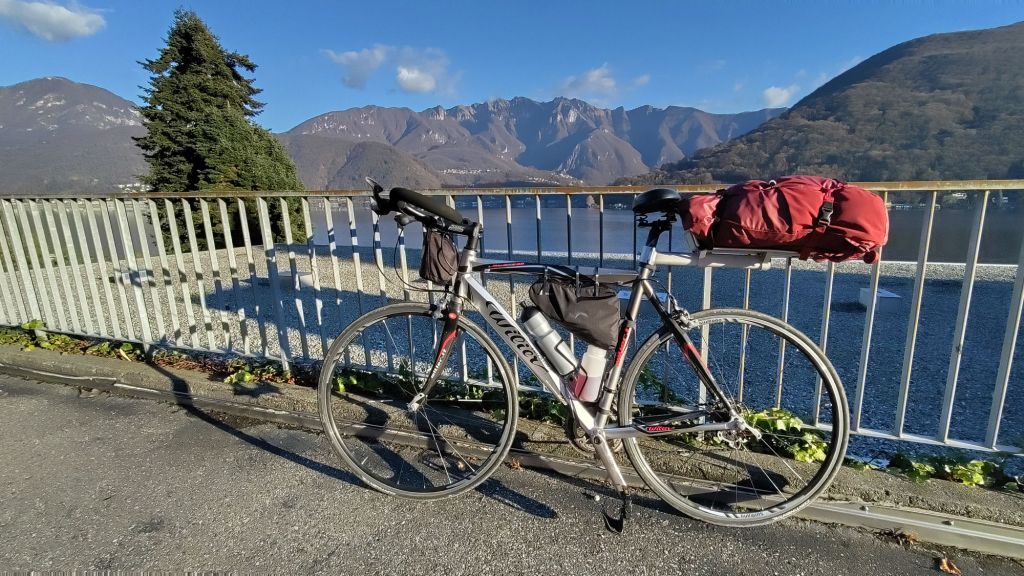
On today’s 40k ride in 12° weather I’m bringing: water in the bike bottle from our favorite sponsor, 500ml cassis-flavored maltodextrin “superjuice”, 250ml turkey soup, and 250ml vitamins and mineralsTwo beer cozies to keep the soup and electrolytes warm, to keep me fueled for two hoursFrozen turkey juice leftover from Thanksgiving, when I baked a nice juicy happy turkeyBought on the second-hand market for a buck (plus postage) so I wouldn’t wear out the nicer family beer cozies we bought in Australia more than a decade agoRepurposed barefoot shoe bag. One side is attached with a velcro strap and the other with a reusable zip tie. I really don’t like velcro but I’m not sure if I can trust the zip tie. Safe but convenient attachments are tricky.
Fuel loading complete
Drinking half of the superjuiceTurkey soup stop (note to self: heat it up more and add salt)Multivitamin and mineral juice stop (note to self: one or the other, else it’s too concentrated)Look, I could camp here beside one of the main north-south highways of Europe. There’s even a fire pit!Where would I put the tent? So much choice!The sun is going down. Drinking the other half of the superjuice and cycling home, properly fueled.
How can I bring maltodextrine with me in powder form? Nanobaggies?
Add homemade cookies and bacon?
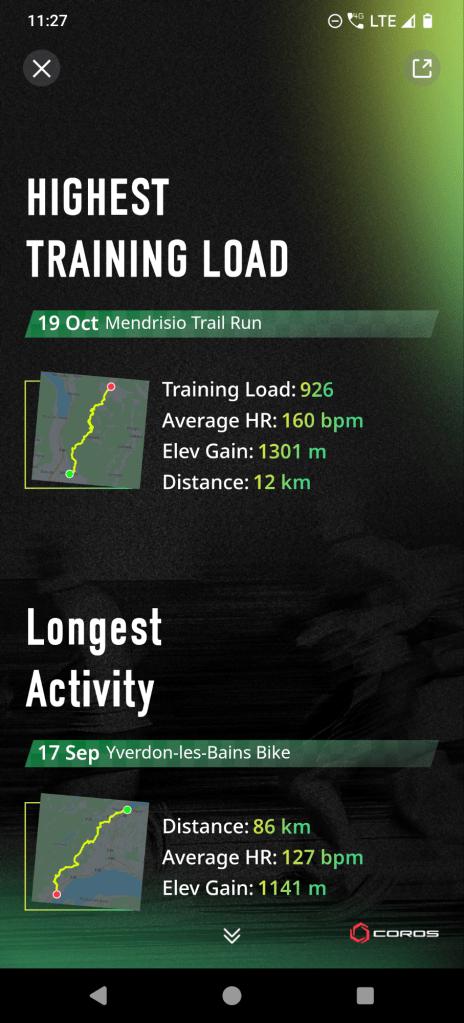
Addendum: the 1300m vertical race I mentioned at the beginning of my post was the activity with the highest training load last year, says my wonderful Coros watch:
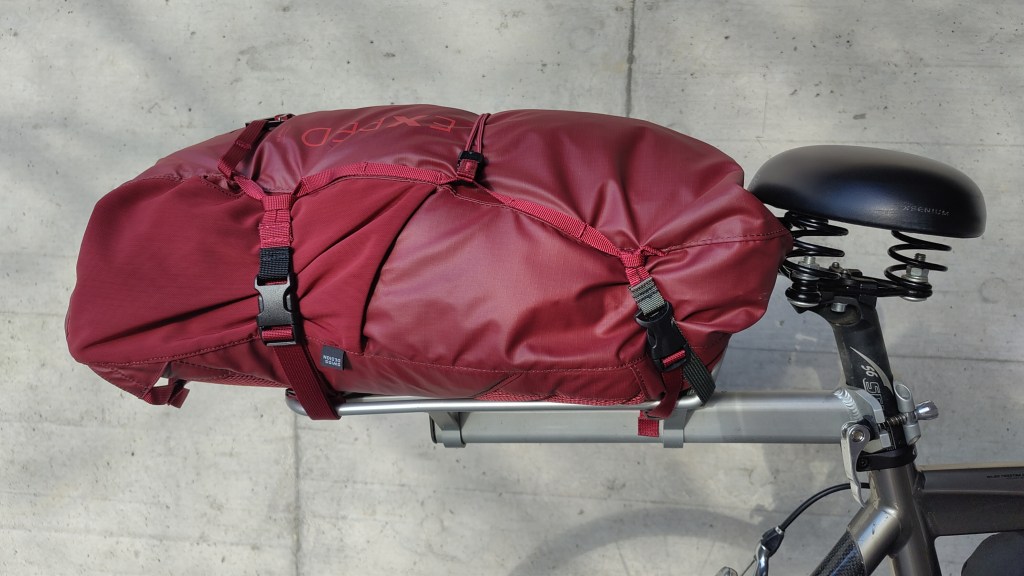
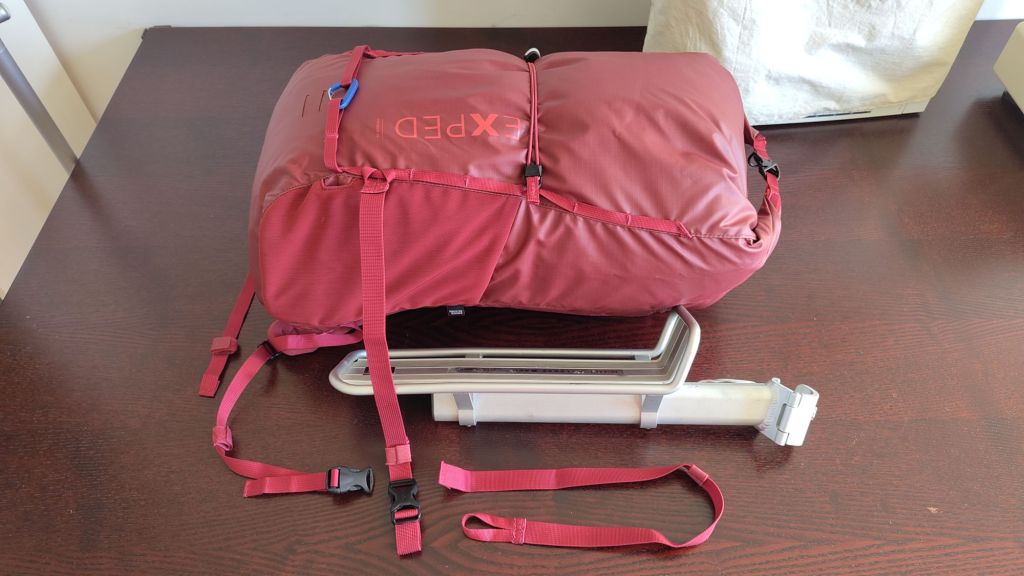
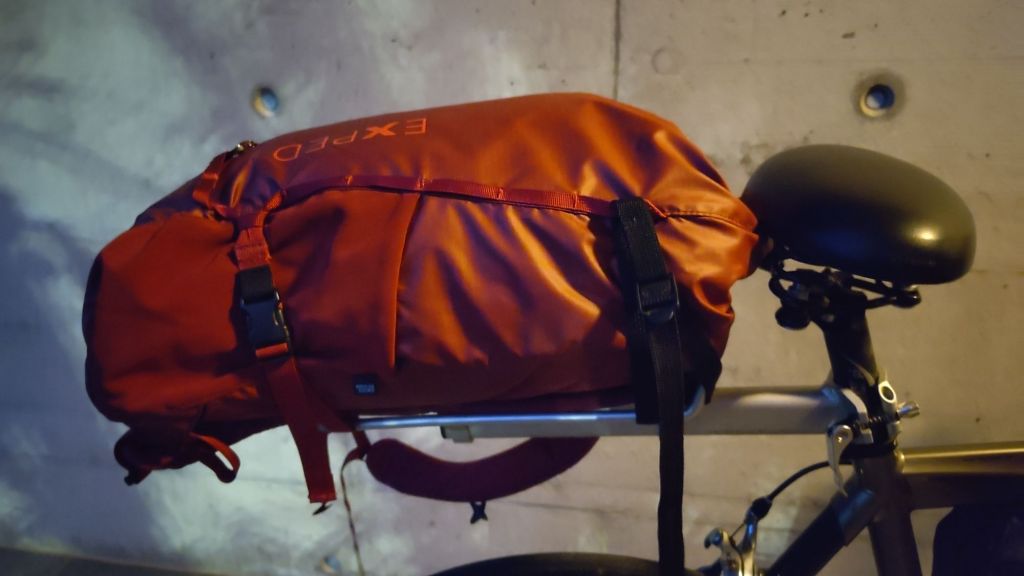
In June 2025 I went on a multi-day bike trip with some friends on the north side of the Alps. While using a trucker’s hitch to attach my 15l EXPED Typhoon waterproof backpack to the lightweight detachable rack on the back of my road bike, a thief snatched my bodybag from the table behind me, leaving me without my phone, battery, cash, normal glasses, house key, ID card and driver’s license. Fortunately my phone was locked, my address is unlisted, and I had no plastic credit cards that needed to be blocked, so I could go on to enjoy the trip with the help of my friends. It did, however, make it clear that, as much as I like the trucker’s hitch and a multi-purpose piece of rope, I needed a faster method for tying my bikepacking backpack to the rack.
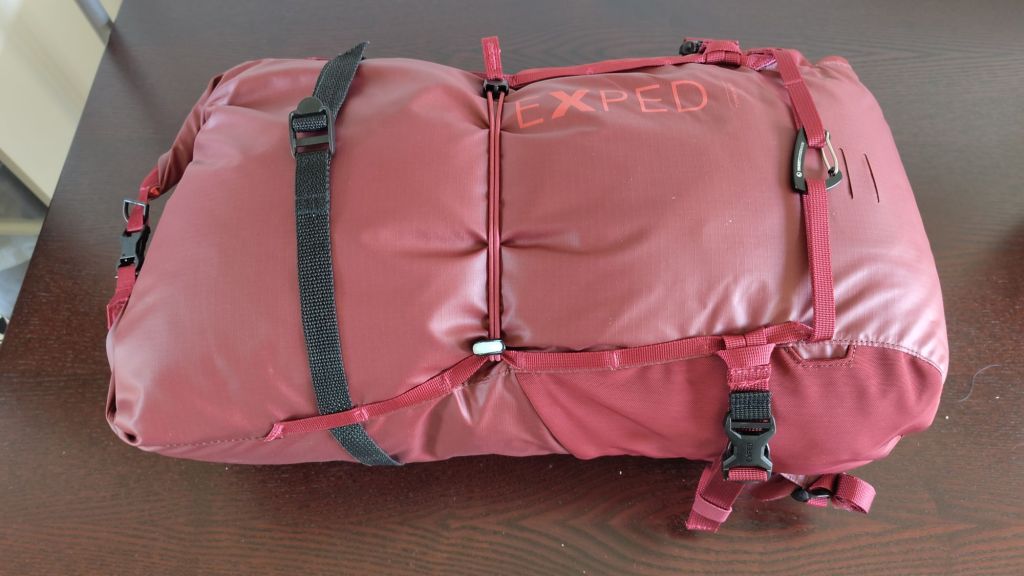
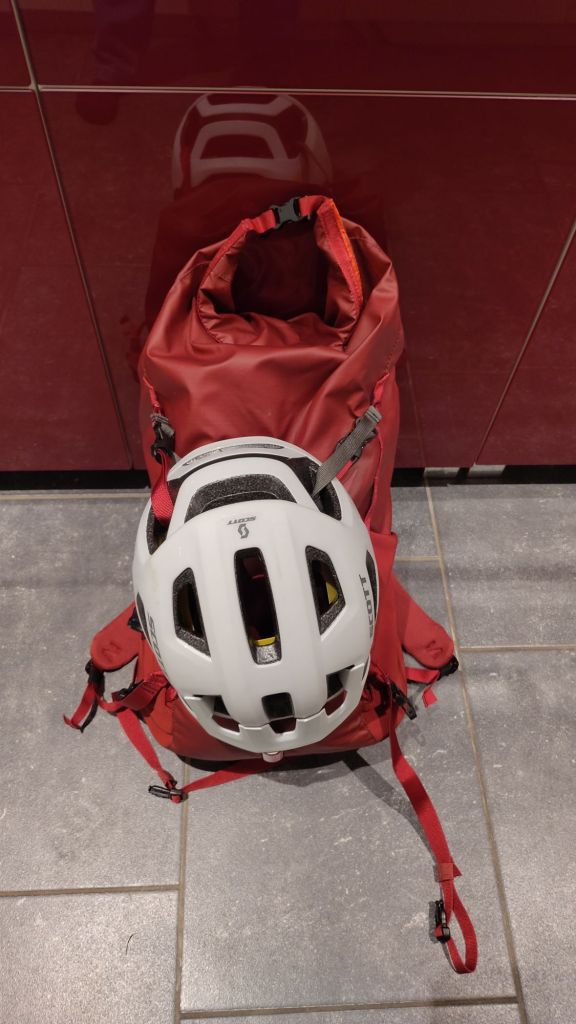
On that trip I didn’t take rain gear or an insulating jacket; the weather was so warm that a bikini, my little black Arc’teryx dress, and flipflops were enough extra luggage. To be a bit more resilient against bad weather, I got a larger waterproof 25l EXPED Typhoon backpack, red to match my bike, and am now doing my usual thing of cutting off extra-long, dangly straps and will try to repurpose them to make it easier to attach the backpack to the rack.
Repurposing project waiting to be done
I also own panniers, but they are overkill for a trip of a couple of days where I don’t need to bring heels and a formal dress to stand on stage and moderate an event, as I did in September 2025. Panniers are also good for camping gear, but the use case in this post assumes staying in hostels along the way.
It’s nice to be able to carry the pack on your back and not leave anything heavy or valuable attached to the bike in order to be able to get on and off the train or bus quickly and easily. I’m paranoid about getting my stuff stolen, and yet it happened to me, so my paranoia is justified.
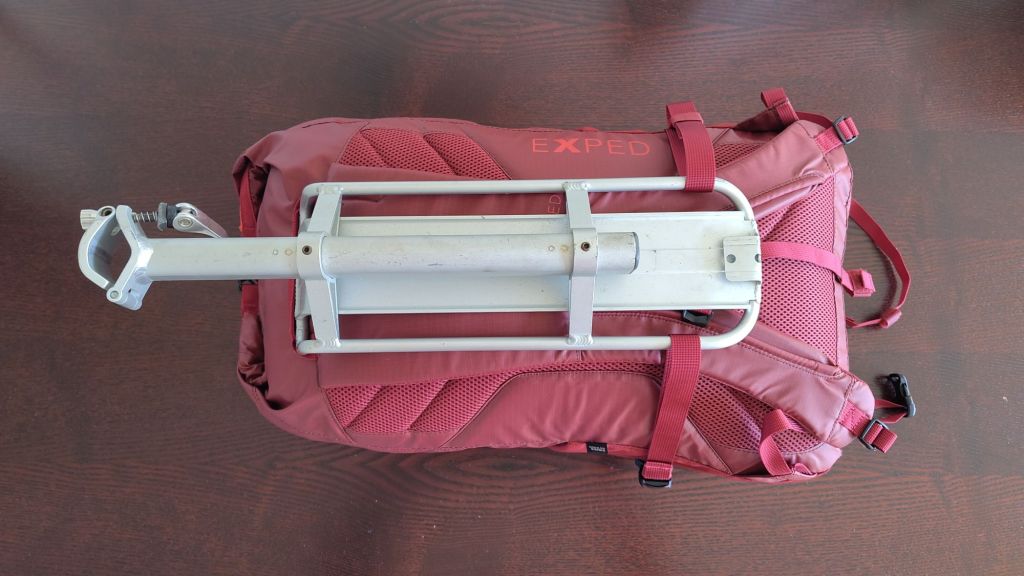
So, how to repurpose the extra-long straps on the backpack to attach the bikebackpack to the rack? I could buy four straps but they wouldn’t be the same color and they wouldn’t be attached to the bag for a quick getaway when entering a train with the bike, removing luggage and hanging up the bike. Plus, I like making straps the right length for me and then repurposing the leftovers. Very fulfilling.
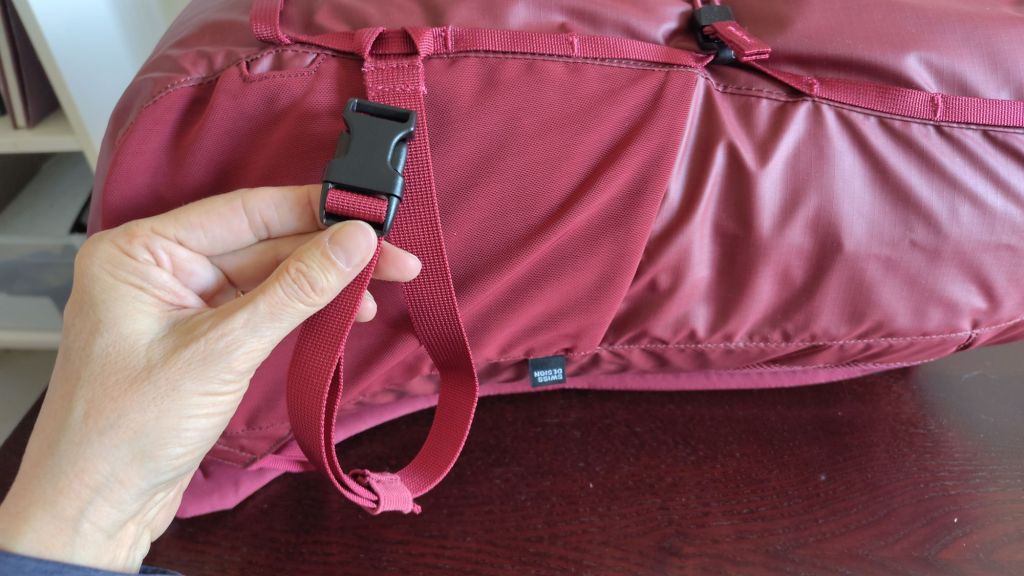
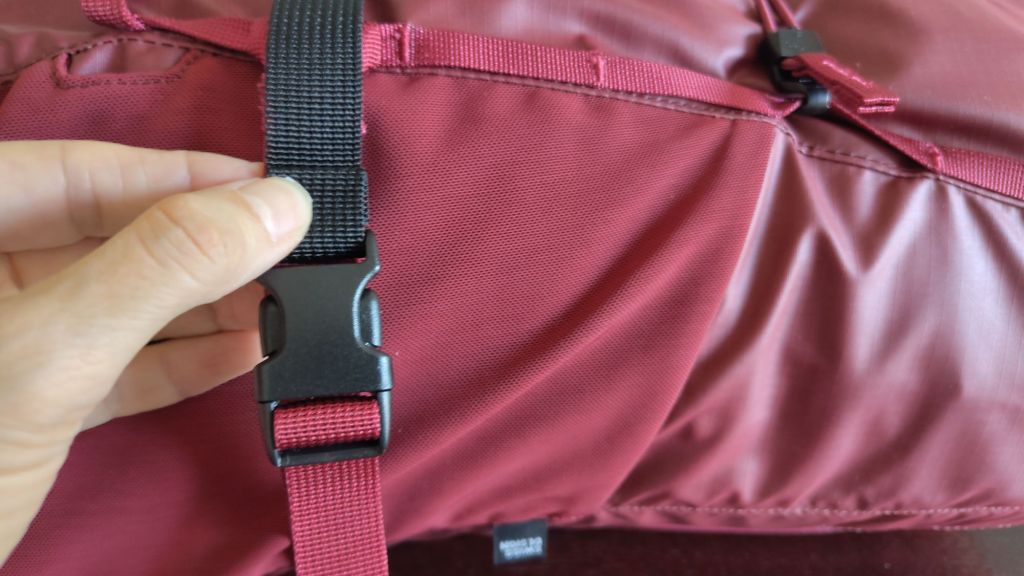
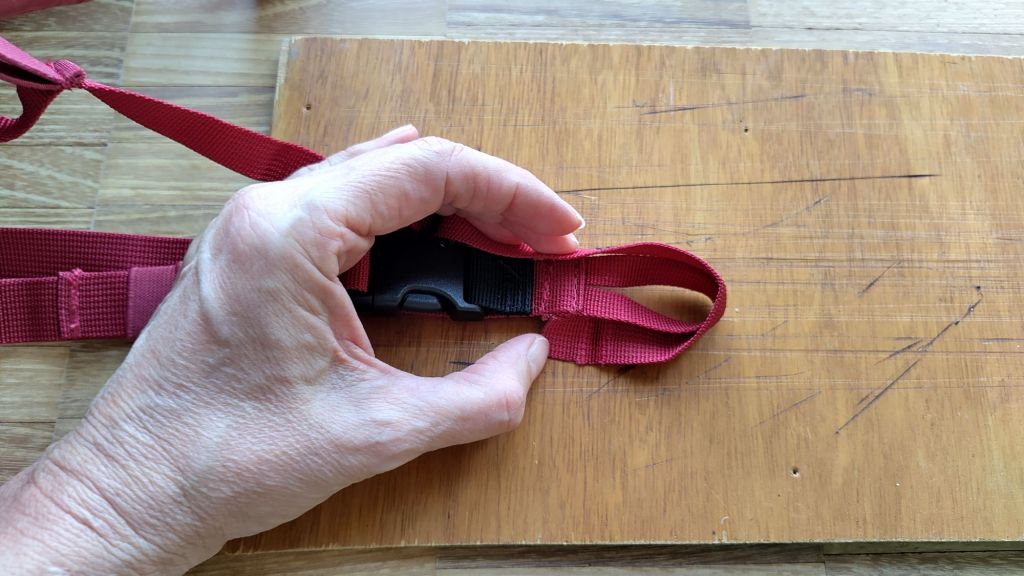
The waist band isn’t really needed on such a small backpack so I can use half on one side and half on the other. The shoulder straps are extra long for my short torso, so I can cut some off for the front attachments. I have an EXPED buckle from a previously streamlined backpack for one of the small straps. I just need a second set (a big and a small buckle) for the straps on the other side. Extremtextil.de sells wonderful buckles of all types but I’m sure I have a couple more lying around. So this should work.
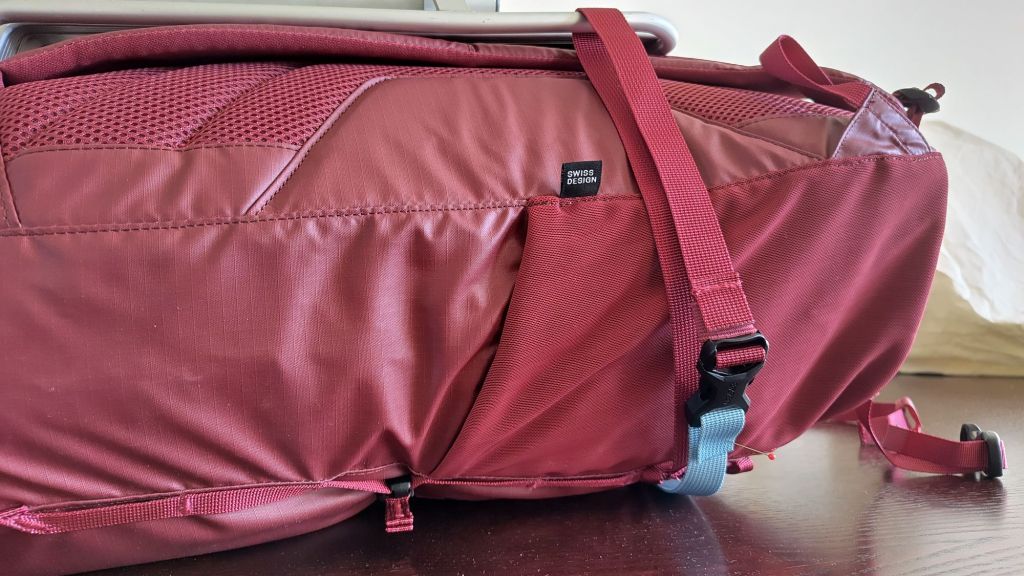
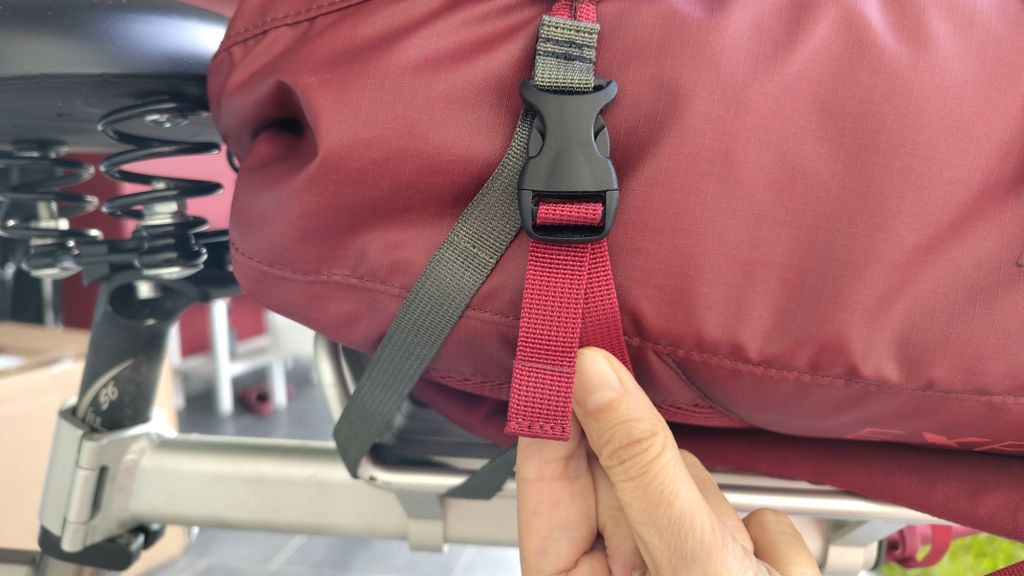
Something like thisOr this? The ingenious loops to detach the waist strap from the backpack can be used to attach them to the daisy chain. So practical!View from below… and from the sideDo I have enough red strap material to attach the other side of the buckle or do I need to use black to replace the blue strap used here for illustrative purposes?
Sewing is more nerve-wrecking than programming because once you cut the material there’s no “undo” button. So, as a first step, I’ll just use black straps to complete the large straps and test that on a bike ride this afternoon.
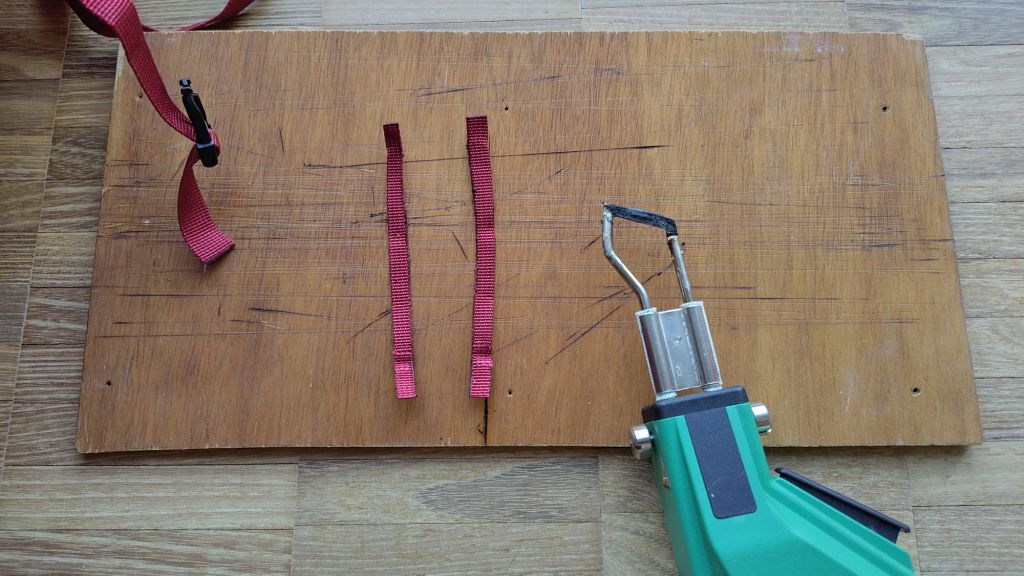
My hotknife doesn’t have an “undo” button either, so it always takes some mental energy to use it, especially when I’m destroying a part that someone else has lovingly designedAnother streamlined piece repurposed, freeing up a buckle and good quality strap material. (My 40l pack doesn’t need a chest strap either. Hope I don’t change my mind!)Thr writing should not be upside down… and the sewing needs to be “nice side out’No “EXPED” written on the second buckle, but it will have to doAbout this much black strap material is neededI sewed on both buckles. Too bad they weren’t compatible so they could still be used as a waist strap. But the chances of needing that are low. The chest strap ensures stability if the backpack is worn on the bike.Ready for the first test! An old simple strap is used on the smaller top side for the test. Note that this won’t stop the bag from rotating around the strap. It’s a much less stable way of attaching a bag to a rack.That looks ok. Nice and streamlined! The elastic ice axe holder has been repurposed to hold a fleece or jacket, in case it gets warm, and a carabiner can create a second holder strap. No dangly bits!So far, so good!Yup, that works!
Early next morning: now for the second set of straps, the ones at the front.
Something like thisEnsure that the pack can’t slide backwards or fall off sidewaysThe black strap indicates the first rough estimate of the length I’d need, but I don’t have that much extra strap
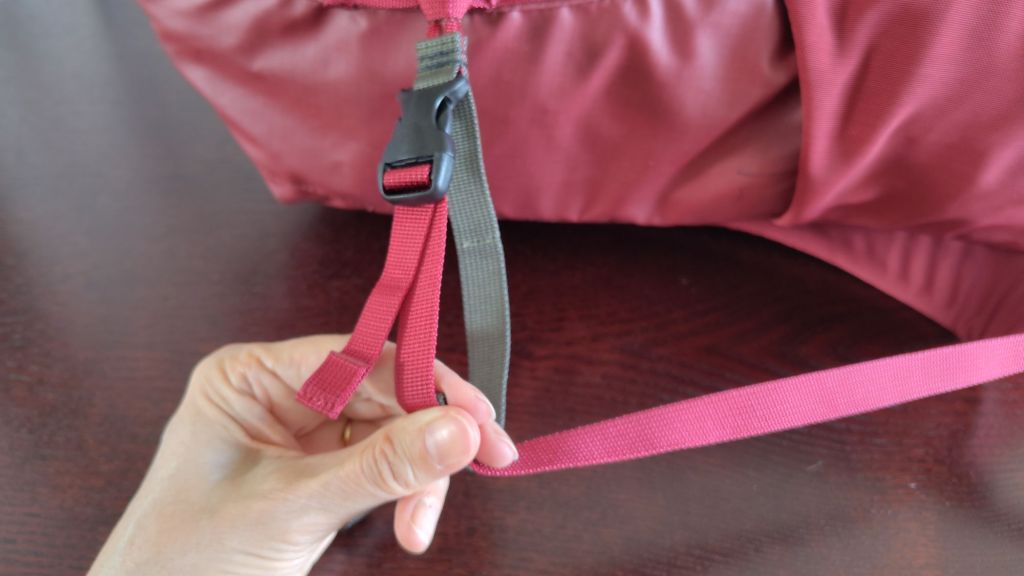
I’ll see if I can repurpose some black straps and pieces from the chest strap. I could make the ingenious loop from the extra chest strap.
After unpicking unneeded straps from my other EXPED backpacks, I think I have enough material for the two smaller straps.
I’ll use the extra strap length from the chest strap for the loops by cutting the piece in half lengthwise:
That looks ok. I’m using a bit more of the grey strap so I don’t need to cut the shoulders straps off too muchHow much of the red strap do I really need?About this much.
Pictures of nerve-wrecking non-reversible hotknifing not taken. Sewing done under stress of not double thinking and doing it backwards.
Done! No obvious mistakes! Made some elastic strap holders too.
The contrasting colors are actually quite nice
Since the elastic just slides over the end when the flap is turned to the inside, I used the hotknife to cut off the end
… and resewed it in the other direction. Now all the ends match!
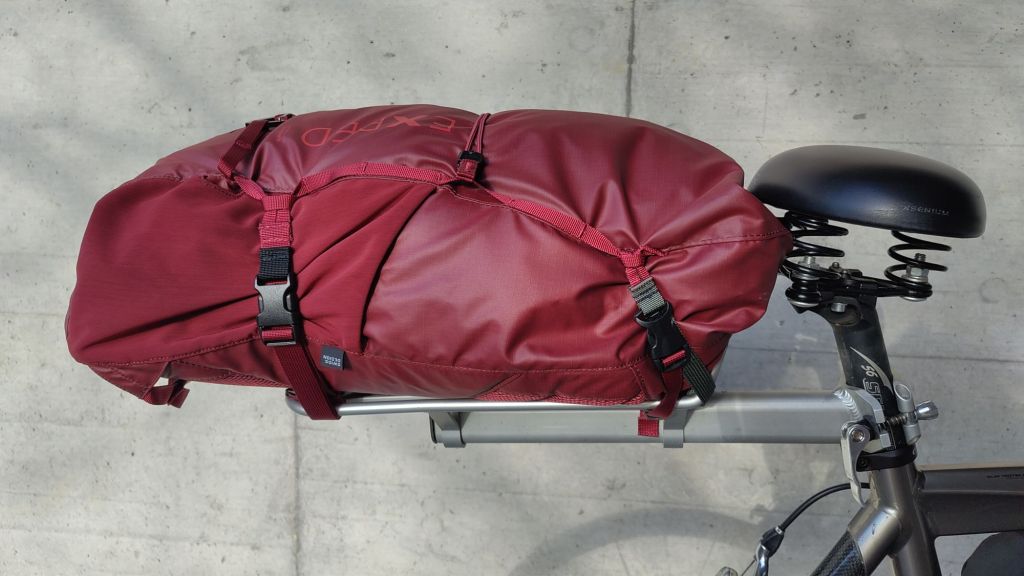
Let’s check it out on the bike!
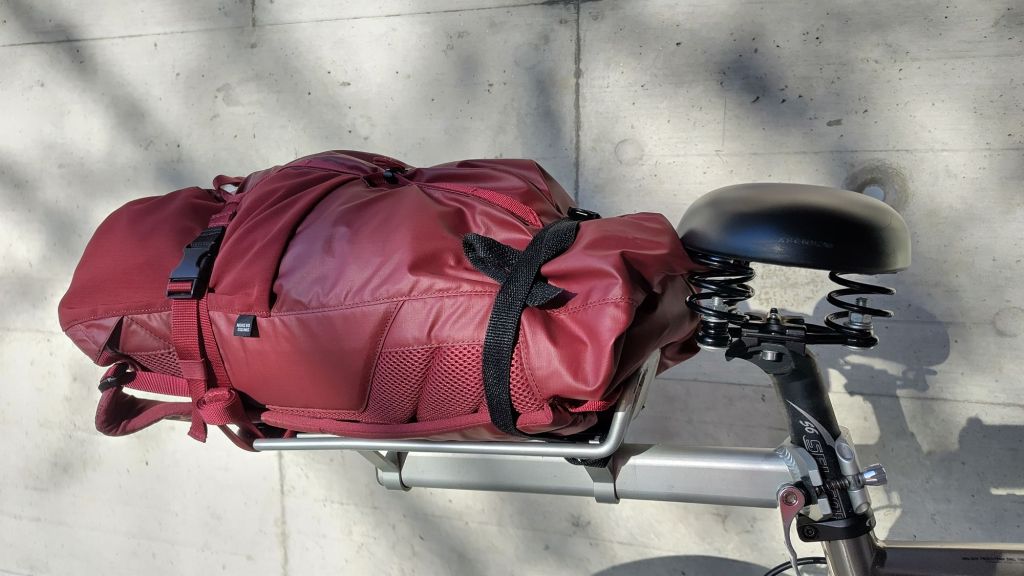
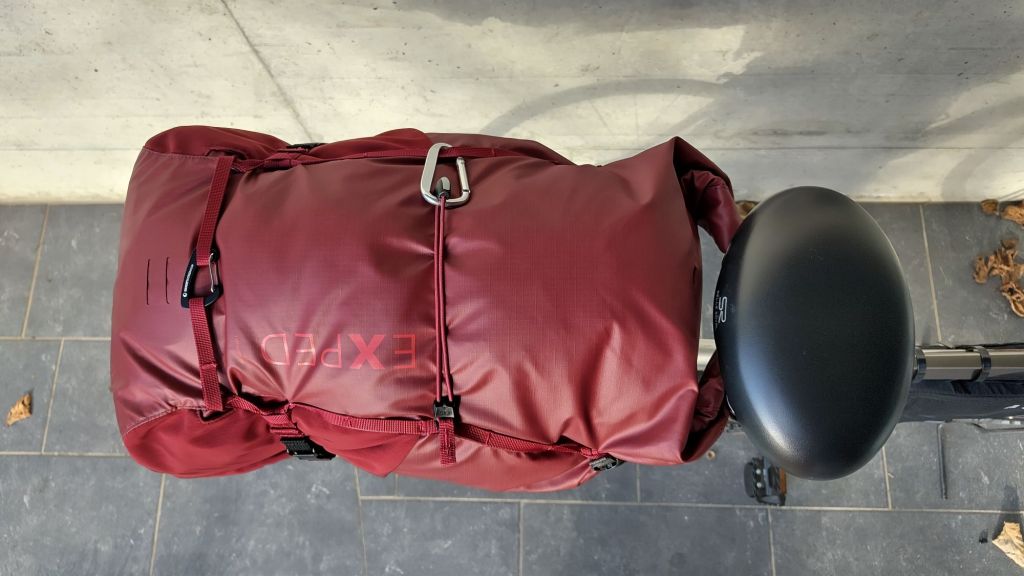
It looks great from the top! Waterproof, stable, easy to attach and to remove!And a nice color too!
Can’t wait to take my bike for an overnight spin!
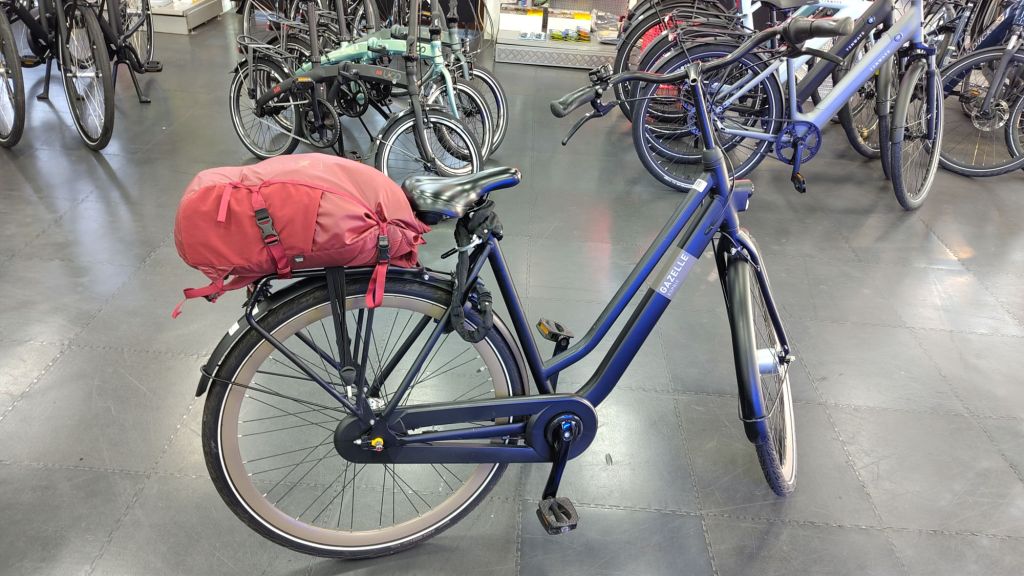
Field test 1: It worked perfectly on the back of my rental bike in Holland! Even through heavy traffic and curvy roads I was confident that it wouldn’t slide off!Field test 2: The straps can also be used to attach the helmet, reducing the number of individual objects to keep track of.
A couple of days later I found myself in the Transa store in St. Gallen, where they had various fire-lighting options available, as well as a metal board on which to try them out.
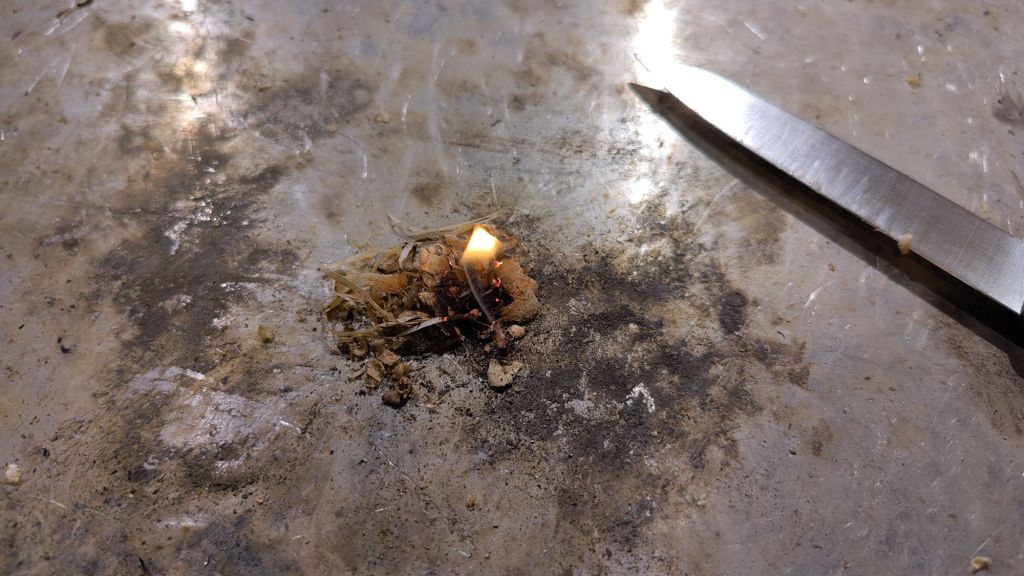
I got into a discussion with the manager, Fabian, about whether carrying a piece of South American fatwood up the mountain and shaving it with another knife was the most efficient option. I hadn’t found it to be that combustable and didn’t see myself using this method when tired on a cold windy evening.
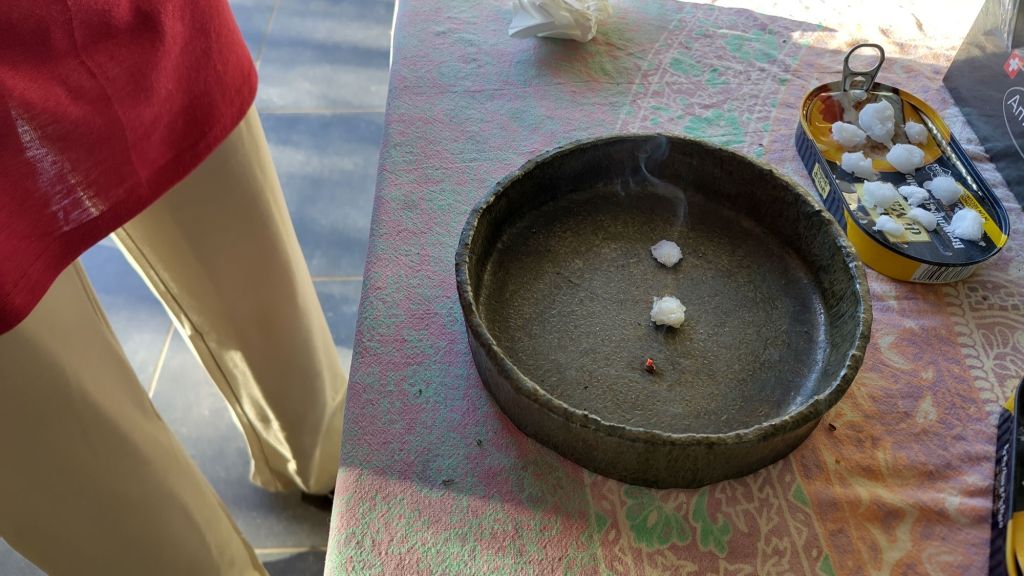
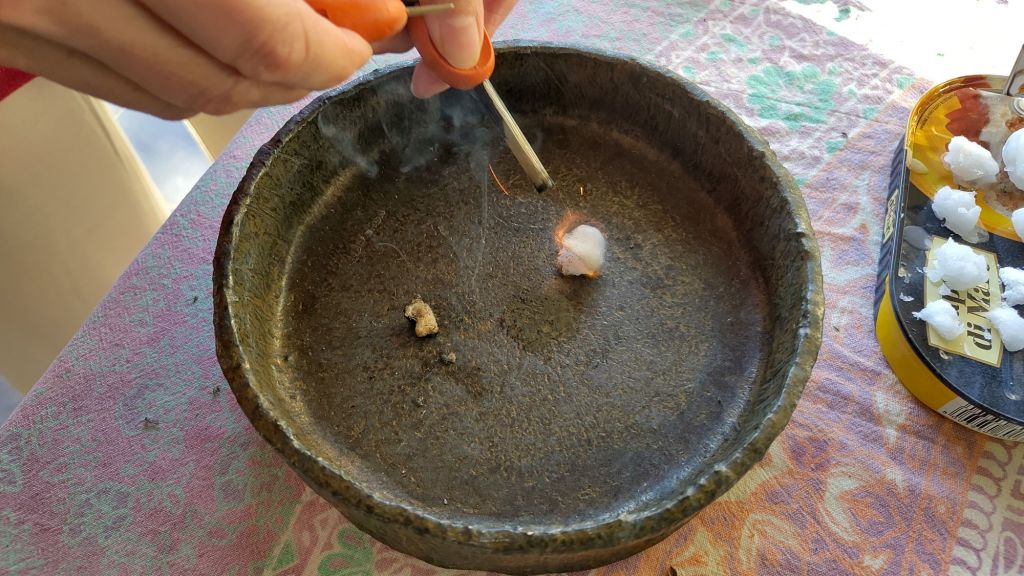
Fabian suggested using cotton wool dipped in vaseline as a good way to get enough of a flame to light Esbit cubes. So I just bought the Light My Fire firesteel and when I was home again, I did a set of experiments.
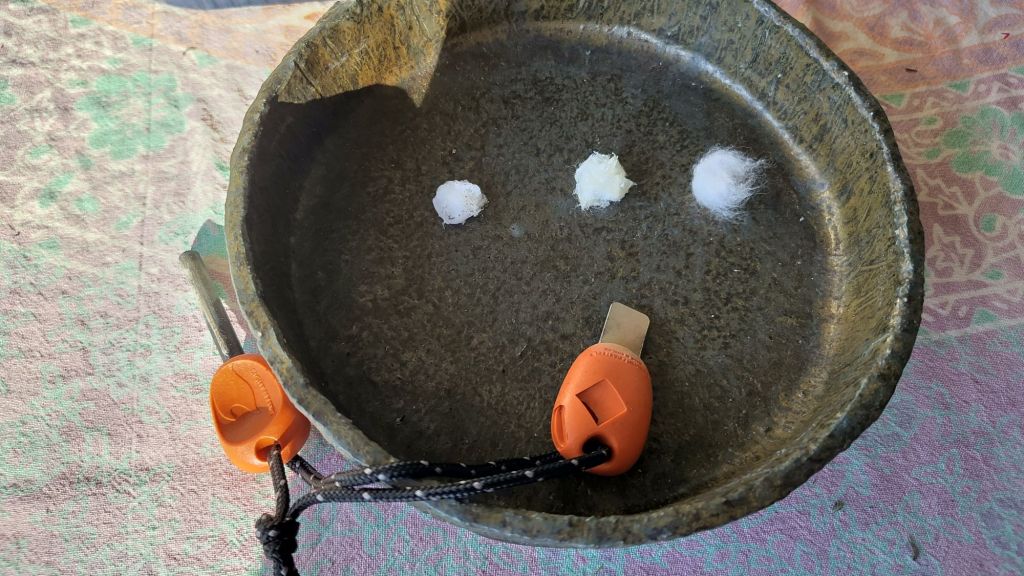
Cotton wool dipped in wax and in vaseline, and the Light My Fire swedish firesteel scout (25g)
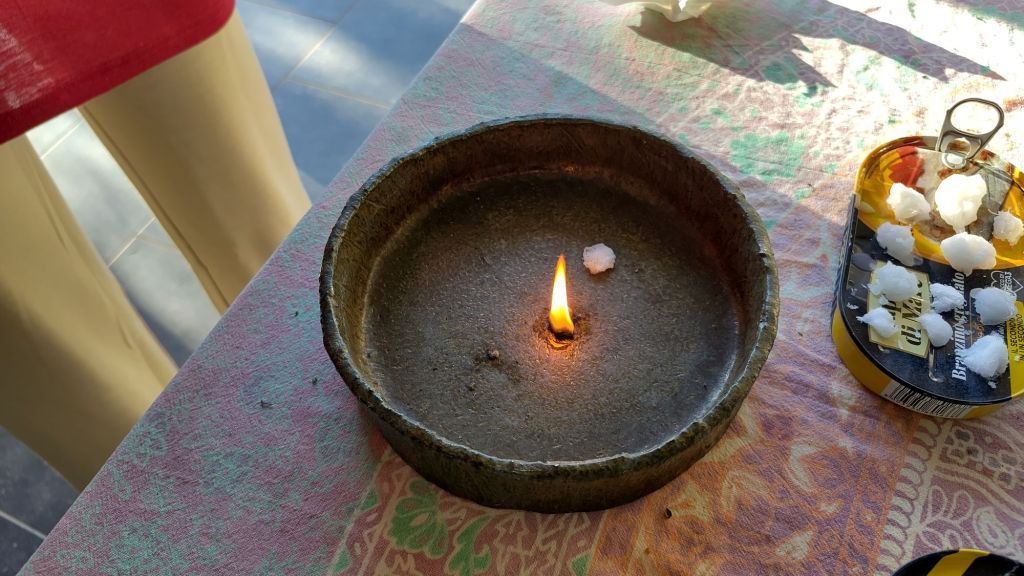
Three samples: cotton wool with wax, cotton wool with vaseline, plain cotton wool
Plain cotton wool lit right away and was burnt up in less than a second so that would probably not be enough to light the Esbit cube.
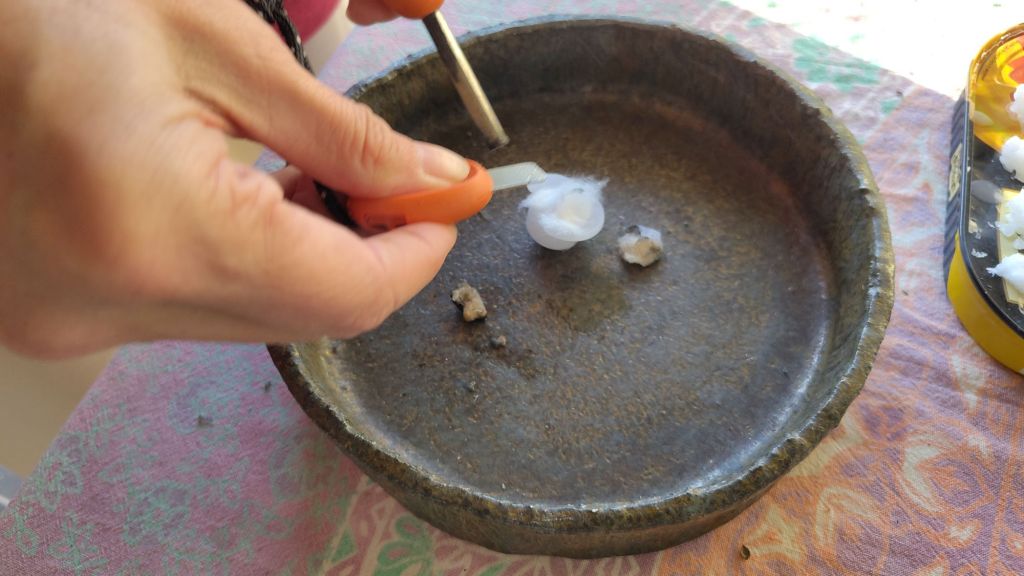
Cotton wool drenched in vaseline didn’t light easily, but it did with a bit of plain cotton wool on top. It burned well and for more than a minute so that would work, but you do get your fingers all greasy.
Plain cotton wool burned but didn’t ignite the waxy cotton wool underneath.
Surprisingly, cotton wool on top of a candle stubb lit up really well with a single spark of magnesium!
Since we want to reduce the number of individual items we’re carrying, reduce the preparation time and avoid greasy hands, I would try to pack a very small drop of vaseline inside the cotton wool or create very small candle stubbs with a bit of cotton wool on top.
Another option would be to scrape some shavings off the Esbit cube and put some cotton wool on top. Could that be done with the steel scrapy part of the Firesteel so an additional knife would not be needed?
The whole point is to have an Esbit cube lighting method that doesn’t depend on lighters (which burn fingers and run out of gas or break at the wrong moment) or depend on individual matches that you have to replenish every time and make me worry about running out. A big ball of cotton wool would last for a long time, weighs nothing, and paired with the firesteel would be a reliable solution.
Stay tuned!
Update 1: apparently magnesium goes “bad” once the protective coating is gone. Kind of like rusting? Need to check this out because the idea is to have a dependable fireststarting strategy!
I was just sitting here, pondering how to make pedaling even more fun, when the email arrived confirming that
New official identity: outdoor equipment blogger
This feels so right! Shop, applied math, canoeing, sewing, mechanical engineering, designing, computational geometry, outdoor enjoyment, scribe … my neglected loves all coming together! I am ecstatic!
As I plan to review many of the companies as a running stream-of-consciousness blog, I’ll set up a separate site for that. Stay tuned!
My Dutch friends came to visit and were immediately enthusiastic about participating in a nanobaggy workshop. They came up with many applications right away.
A bunch of dutch baggiesPreparationApplicationFrustrationAdaptationPriegelen!
Ideas for nanobaggies were: wet bathing suit, toothbrush, bar soap, shoe, snacks and cellphone baggies.
A bikini baggy and a soap baggyHandy baggy!Happy Hollanders ready to bike down the Rhine
I’m going on a long winter bike ride today. My husband would like to be reassured for the next three hours that I am ok. He would like me to take “his” pebble along. This worked great when we wanted to find our luggage in the airport and someone had taken it off the conveyor belt. But I don’t really like being tracked.
The Pebblebee is an excellent product for tracking. The battery is long-lasting and the app easy to use.
When our daughter was on an out-of-country trip she didn’t have to worry about needing to ensure her internet connection in order to keep us up to date. However, when she didn’t seem to be moving after her airplane had landed though … there was nothing much we could do but worry. It turned out that the Uber they had ordered didn’t show up.
Other cyclists also talk about having to let their wives know what they’re up to. I would like to not worry that my husband has fallen and become unconscious on one of his long trail runs up and down the steep mountains too.
But is it a real risk reduction tool?
What could be the reasons for:
No signal: the battery running out, malfunction, entering neighboring countries’ internet space.
No movement: the tracker has fallen out of the bag at a break, the rider has fallen asleep on the beach, lunch became a 4-course event.
What can a spouse do and why? In the first place they’d like to be reassured that all is well, so they can phone. If the phone goes unanswered, then at what point do they call search and rescue?
In the happy flow case, the tracking spouse can virtually and vicariously enjoy the trip of the rider/runner. The spouse being tracked doesn’t have to stop as often and take pictures of locations to send to the family chat (though I like to do that anyways).
The cost is that the spouse being tracked is now intrinsically responsible for ensuring that the tracker is sending out the right signal. So instead of taking pictures, I would have to look at my screen, for which I have to take off my sunglasses, deal with an app, and reduce the feeling of untethered enjoyment.
The chances that the tracking spouse would save the life of the tracked spouse is very very small. In case of a serious accident during a bike trip, the ambulance would already have arrived. The unconscious spouse who’s fallen in a steep mountain valley … ?
So it’s about managing how much risk the spouse may take on their own, balancing the responsibility of the away-from-home spouse with the reassurance of the at-home spouse.
How do you resolve this balance? How do you manage the risk appetite of the involved parties?
The best strategy is to not need first aid in the first place. Ensure your brakes are in order, don’t overdo things, drink enough.
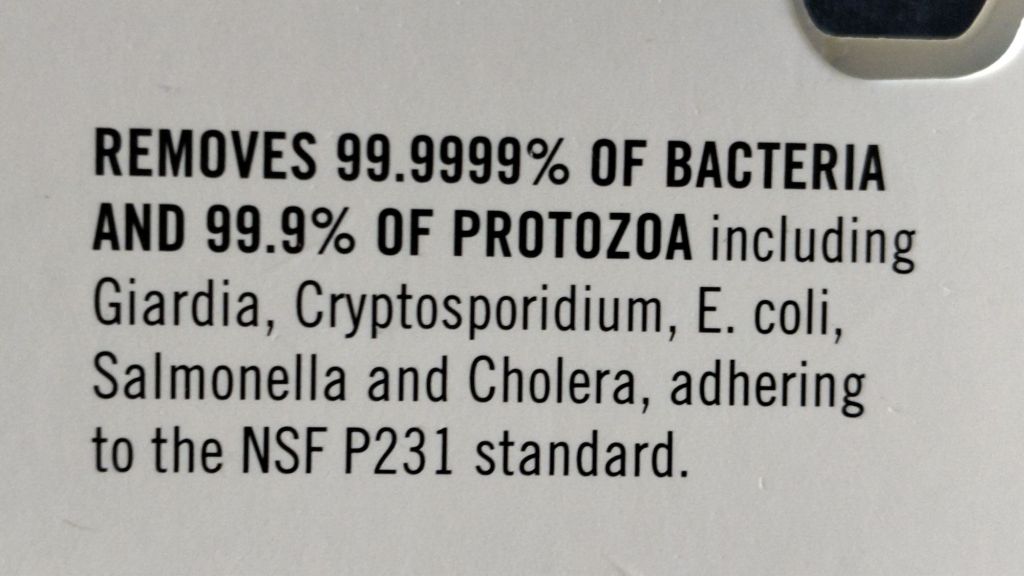
But you don’t want to drink water with bacteria or protozoa in it! You could add a micropur tablet and wait for an hour or filter your water.
Bag with bacteria
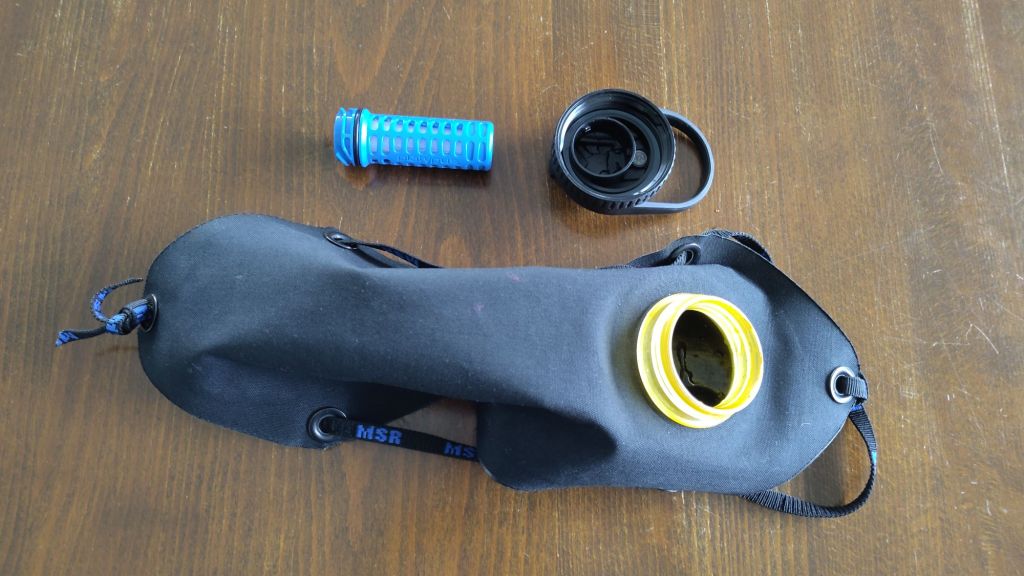
The DayCap in-bottle filter from Platypus fits perfectly on my old and rugged 2-litre MSR Dromedary waterbag. This water bag, by the way, was bought more than 25 years ago, and it is still in perfect shape – no delamination, no odors. Fantastic quality! So that’s really cool.
You can fill the bag up with “dirty” water from, say, the Rhine that you’re cycling along, and squish out a
stream of water without bacteria.
This way you can fill all kinds of biking or hiking bottles quickly and endlessly for yourself and your friends.
A lot of wigglies I’d rather not ingest.
You can also use it the original way and insert it in
a Camelback bottle and suck the clean water out.
as well as:
many other brands.
I prefer to keep my bottles bacteria-free though. I sometimes put electrolyte tablets or maltodextrine in my bottles, which I wouldn’t want to put through the filter.
When you’re done with producing clean water you should
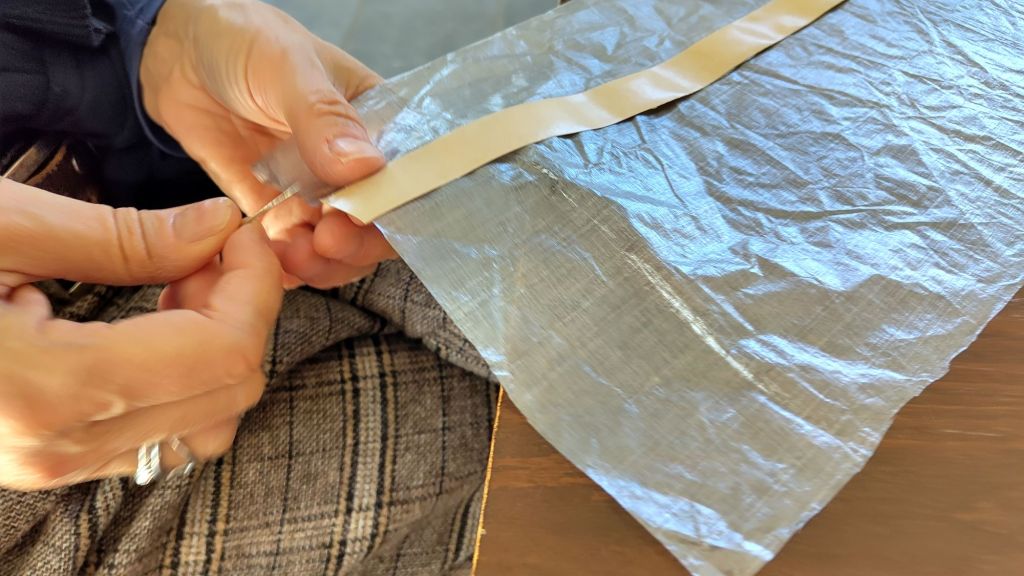
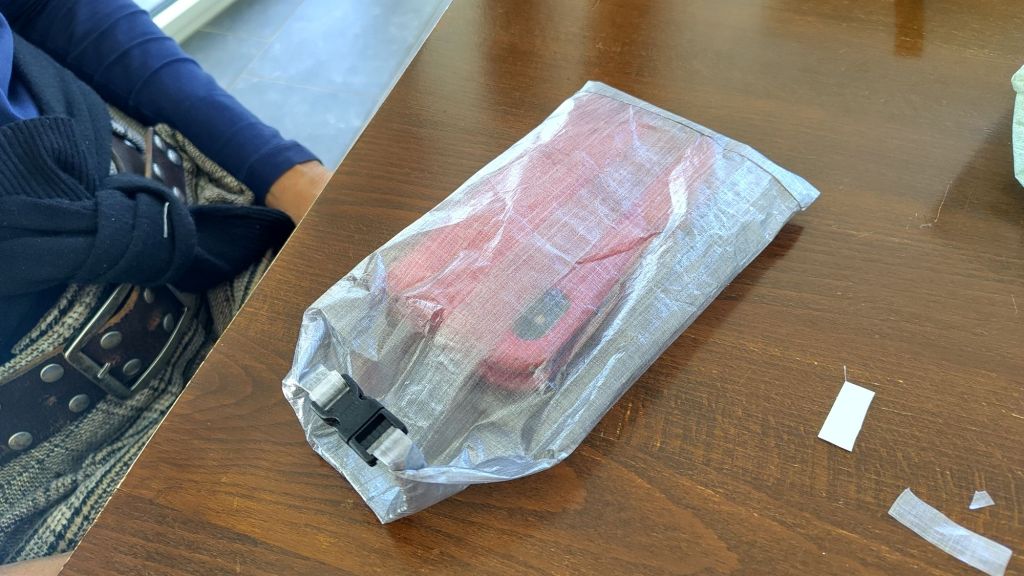
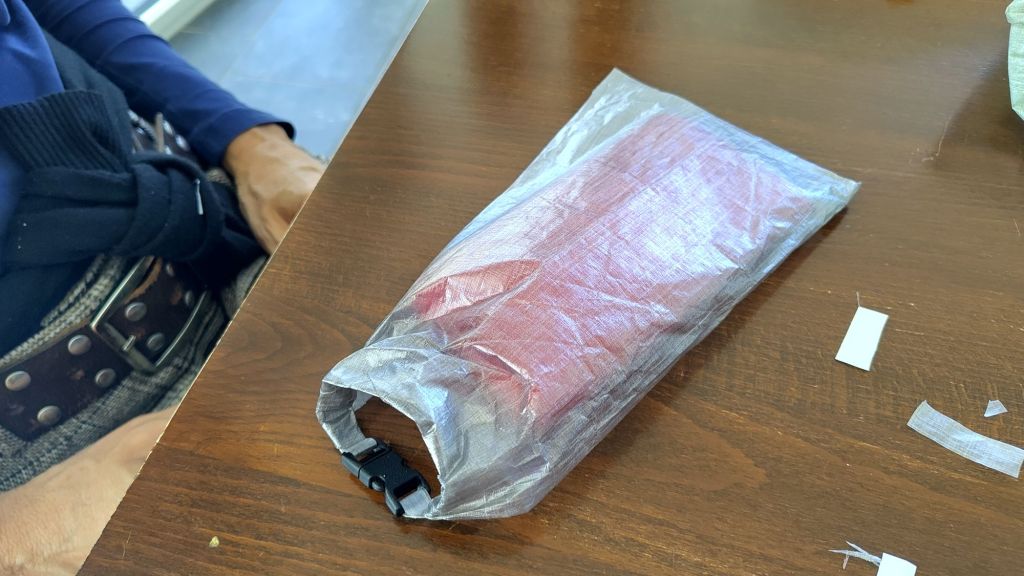
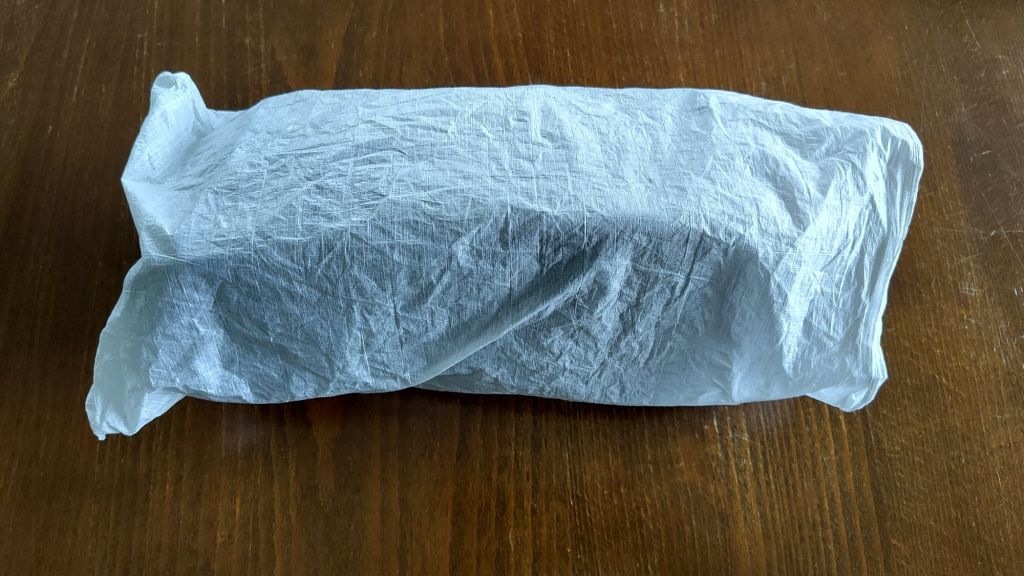
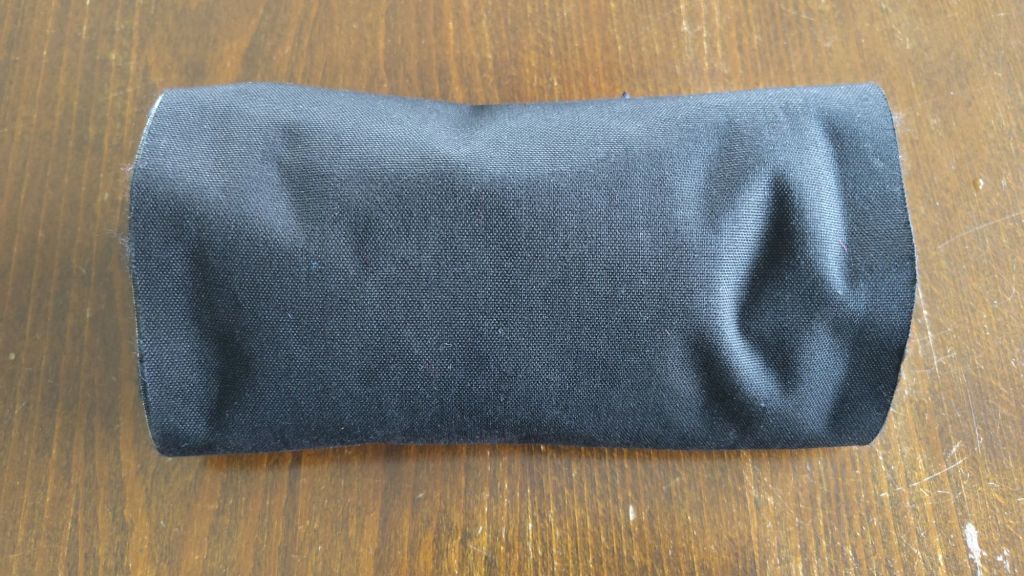
dry itroll it up togetherand store it in a protective and durable nanobaggy.
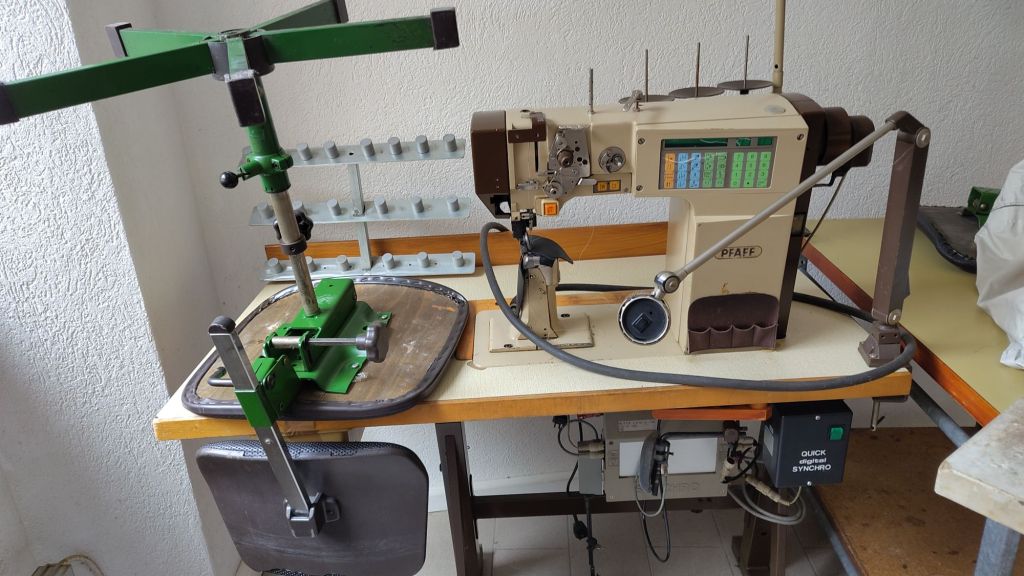
8 years ago I bought a heavy duty Sailrite sewing machine for boat covers, sails and sun shades. One of the first things I used it for in 2018 was to fix the sunshade of our house with this Big Blue Beast . I fixed a lot of big heavy boat covers that were difficult to move around.
A lot of fixing work is patching things up. Such as here: Toto’s red boat cover. This requires sewing in circles, which is difficult to do by dragging the cover around. I put the Blue Beast on a set of wheels to make it easier.
Yesterday I had the great pleasure of meeting Alex, a professional cobbler who is now retired and selling the equipment in his atelier.
Old and sturdy
It’s an industrial machine, used for many decades to sew bespoke shoes. I would love to use it but it’s too big for my abilities and needs.
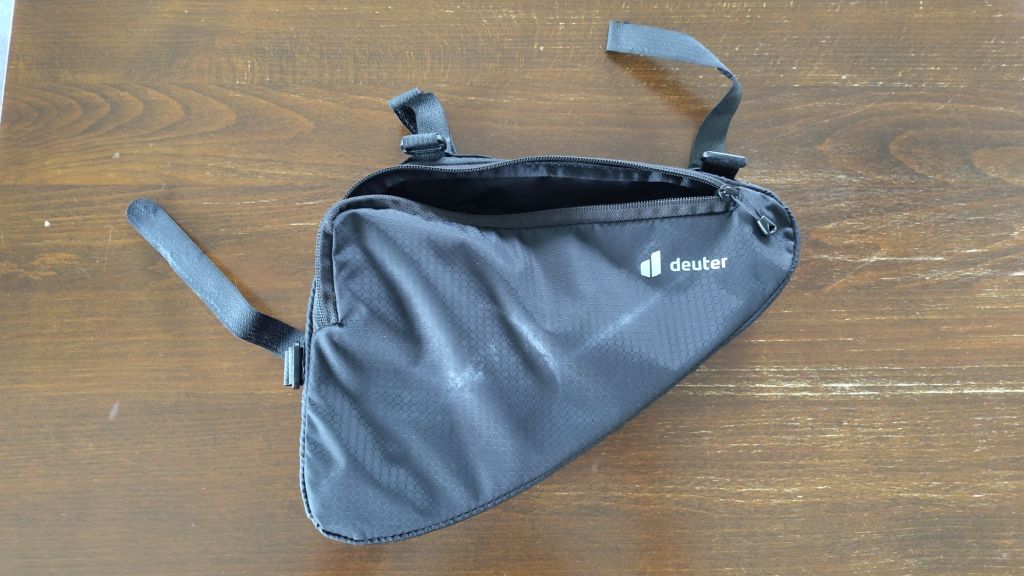
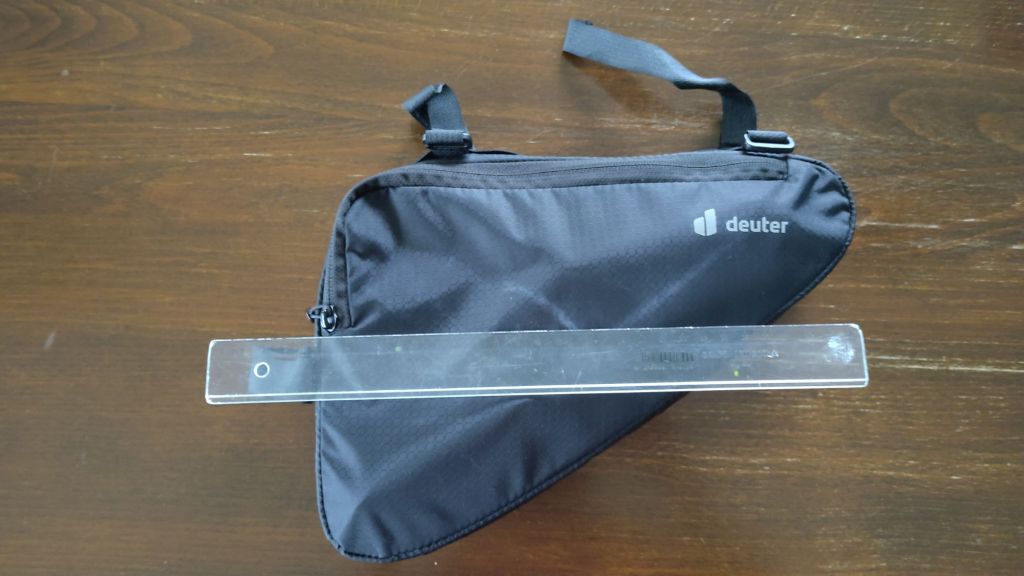
from Deuter is always attached to my bike. I never ride anywhere without:
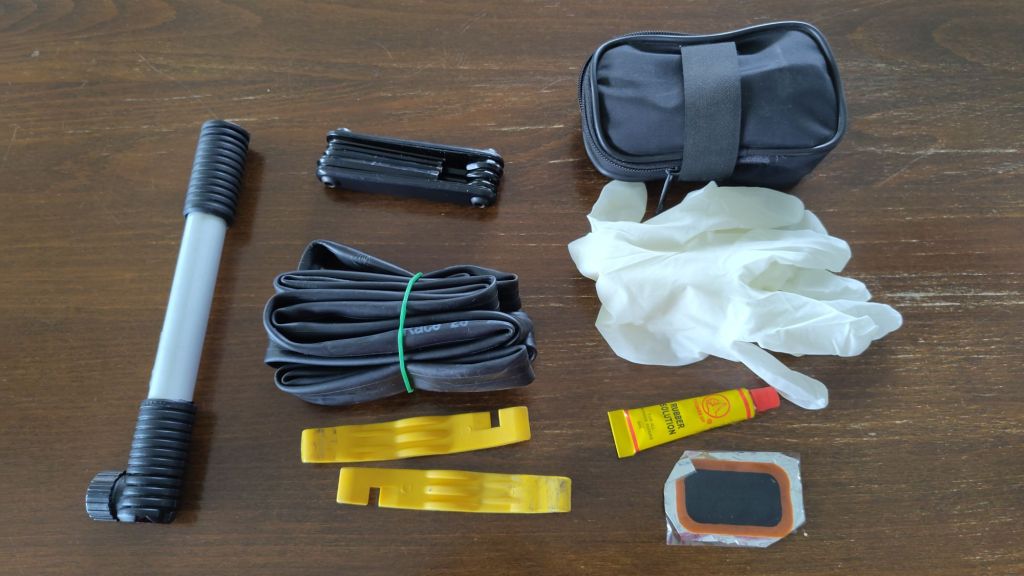
a spare tire, levers, pump, patch, glue, multi-tool and gloves.
Maybe I need a second patch? And the tools to fix a broken chain? I really don’t want to have to walk my broken bike. This stuff lives in
the bottom of the frame bag.
I also put my phone in here, and worry about it getting scratched. I also worry about the whole bag being stolen, even more so since my phone recently got professionally nicked. I have
a small lock so no one will be able to just walk away with the bike.
I’d like to reduce the ability of someone to steal my tech first aid, in part or the whole bag. Plus keep some serious cash, id and next-of-kin/biking buddy telephone numbers in a safe spot in this nonremovable bag, in case my phone gets stolen again, or I crash myself unconscious.
I’d like to add a bike-specific body first aid kit for non life-threatening scrapes and pains, and my
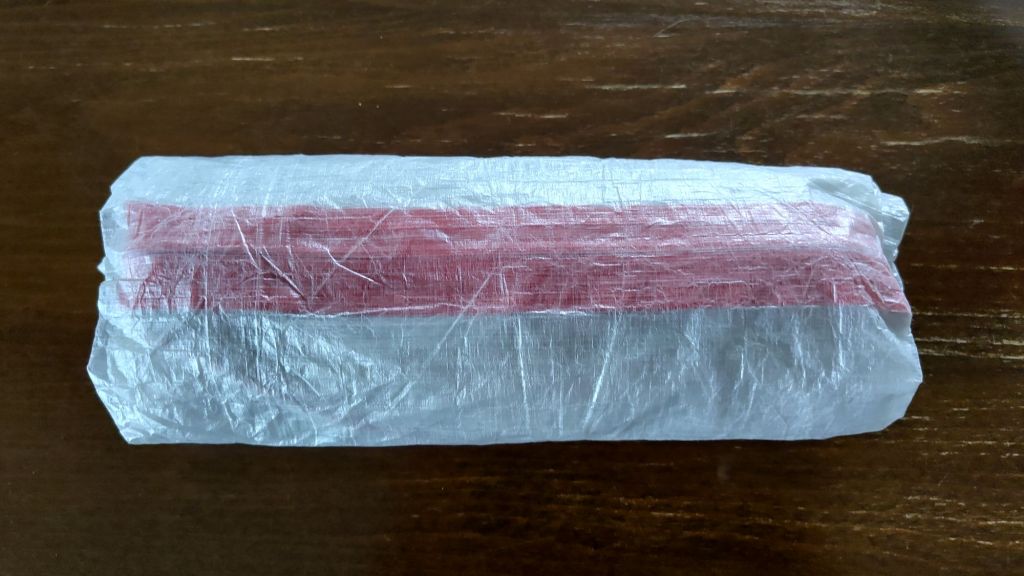
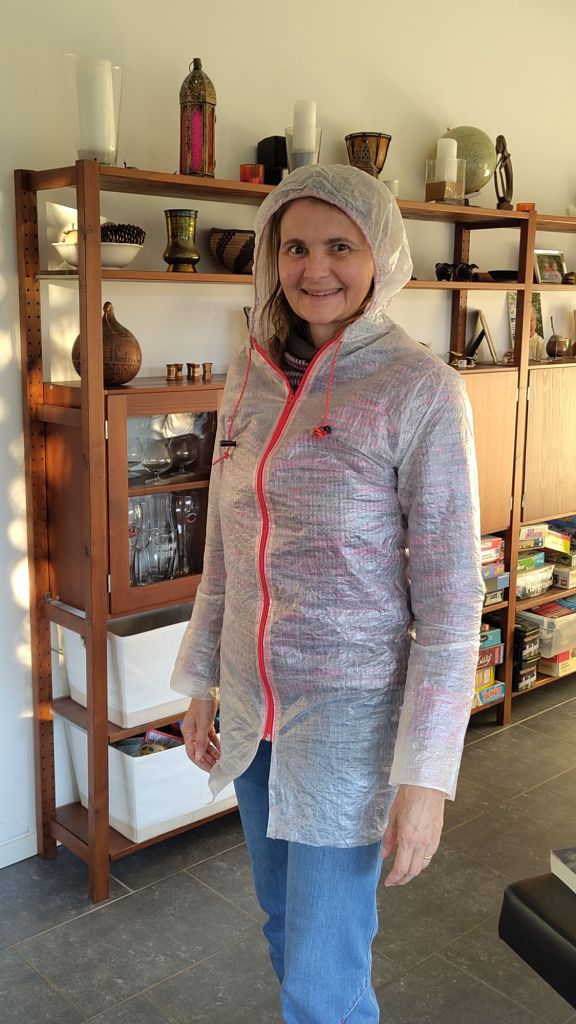
60 gram dyneema rain coat
… in case I am surprised by a sudden local thunderstorm, need to stay warm while waiting somewhere or want to take a nap on a wet lawn. It also reduces decision fatigue “should I bring a raincoat?” And makes getting out of the house faster.
Body baggie
Just putting
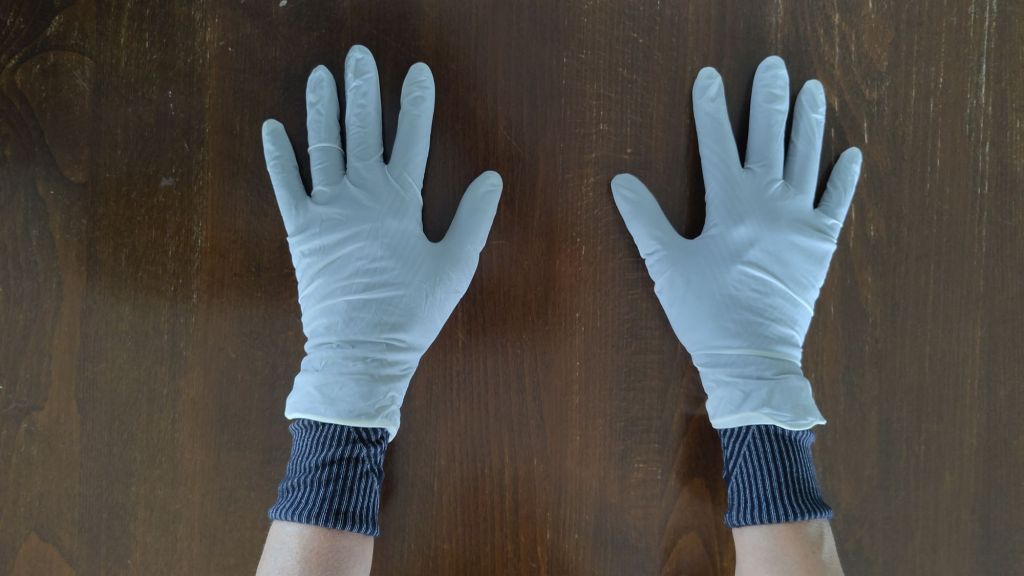
the surgical gloves over my lightweight cycling gloves
warmed my hands up right away, which I noticed when I took them off. Do I need an emergency energy gel? At what point does first aid become just normal bike trip prep?
Tissues?
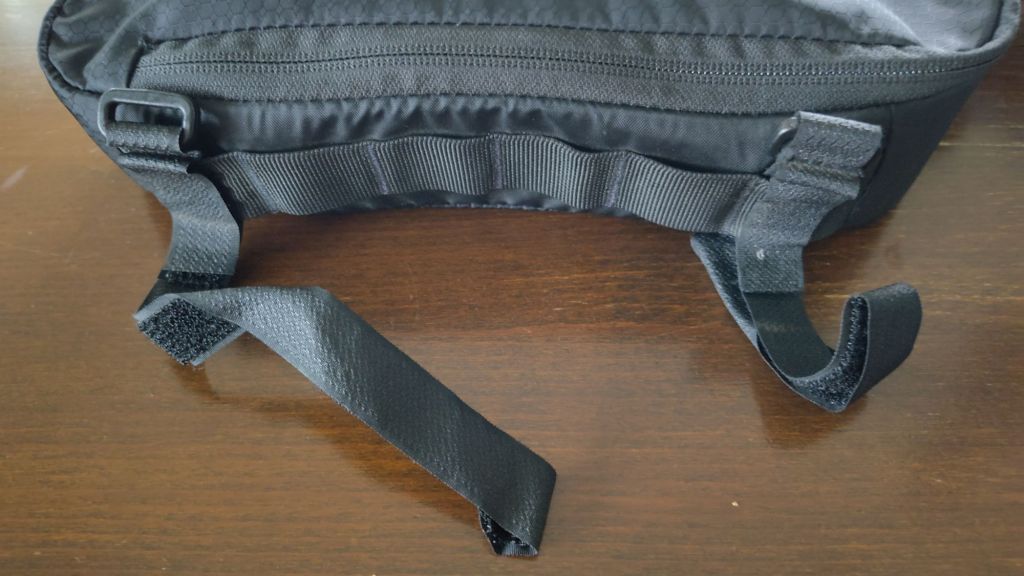
I’d like my housekey not to get lost in the bottom of the bag, and neither my phone. I don’t want the bag to bulge out and scrape my legs, and I want to get rid of the velcro … so lethal to knitted materials!
The whole thing weighs 700 grams already! So the carbon-based-body first aid better not weigh much. My minimalist bike buddies will be turning over on their saddles, seeing how much “just in case” weight I’m bringing. Otoh my body weight is quite a bit lower than theirs, so I figure it’s ok to compensate for being colder more easily due to a lower bmi, and having less stamina for walking broken bikes.
So what’s the plan?
Replace the top loops with lots of zip ties
Sew in a horizontal divider
Create a first aid kit with a longish shape containing
Bandaids
Antiseptic cream (Nestosyl)
Paracetemol, ibuprofen and aspirin against a, inflammation and headaches
Other stuff tbd
I’ll publish this now and update it later.
Update: thief-proof baggy
These reusable zip ties
could also be used in an emergency situation, to replace a failed attachment loop, or to tie someone up, using proper police technique. I’d need to leave them long or they’d scrape my legs. Hmmm, maybe just keep these in the tech first aid kit and use nonreusable zip ties to attach the bag to the bike. The multiple use approach can get a bit over the top.