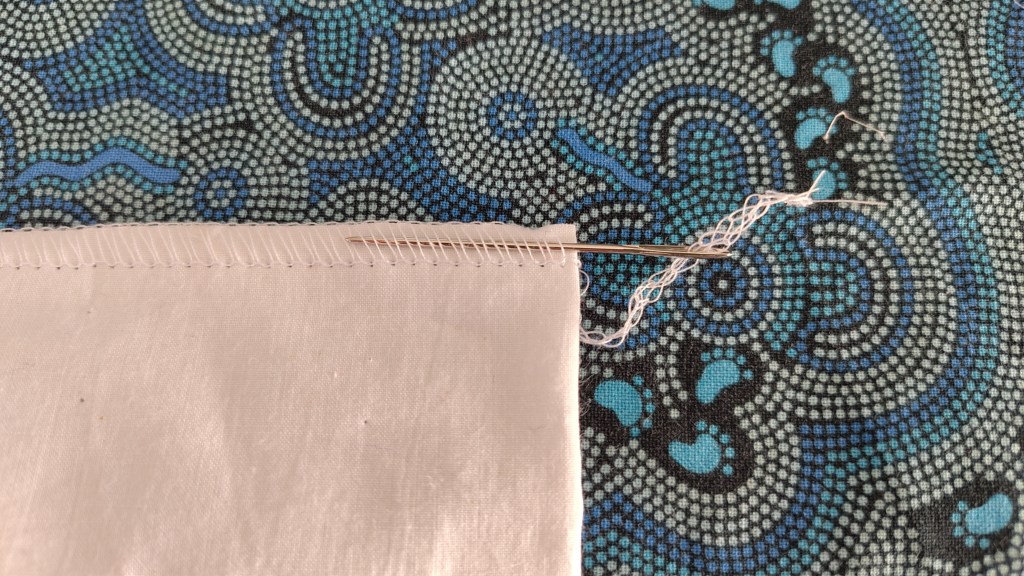
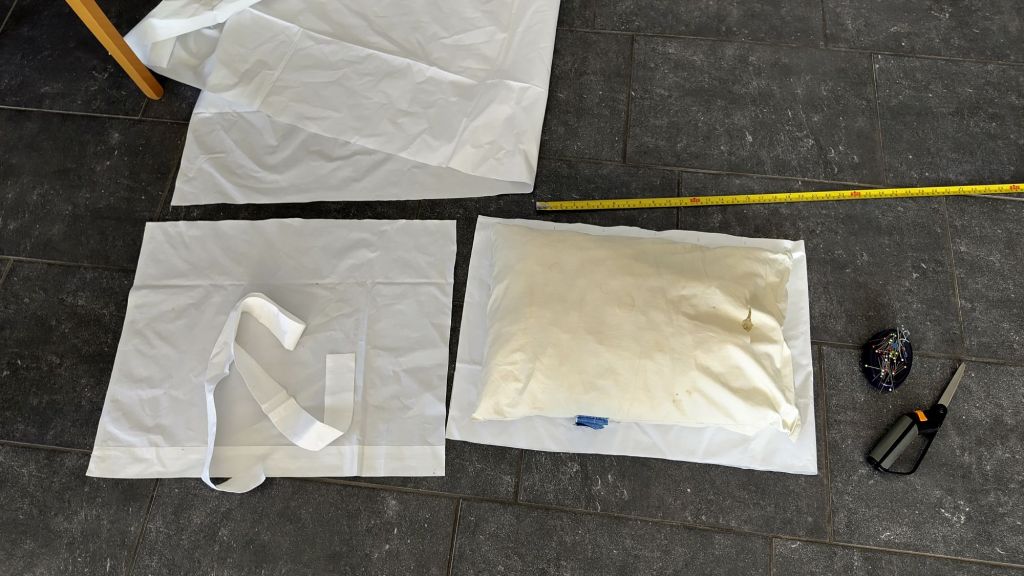
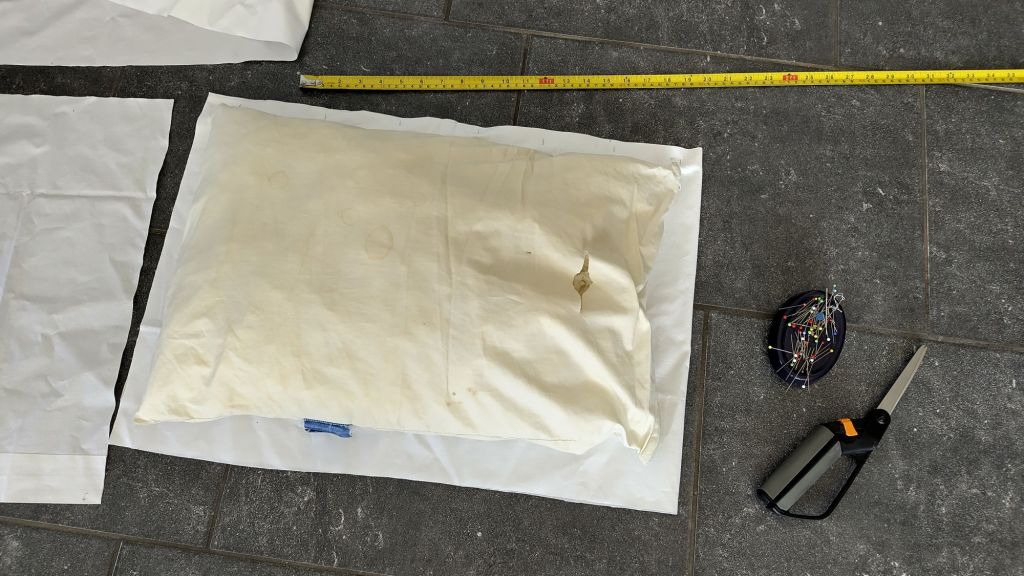
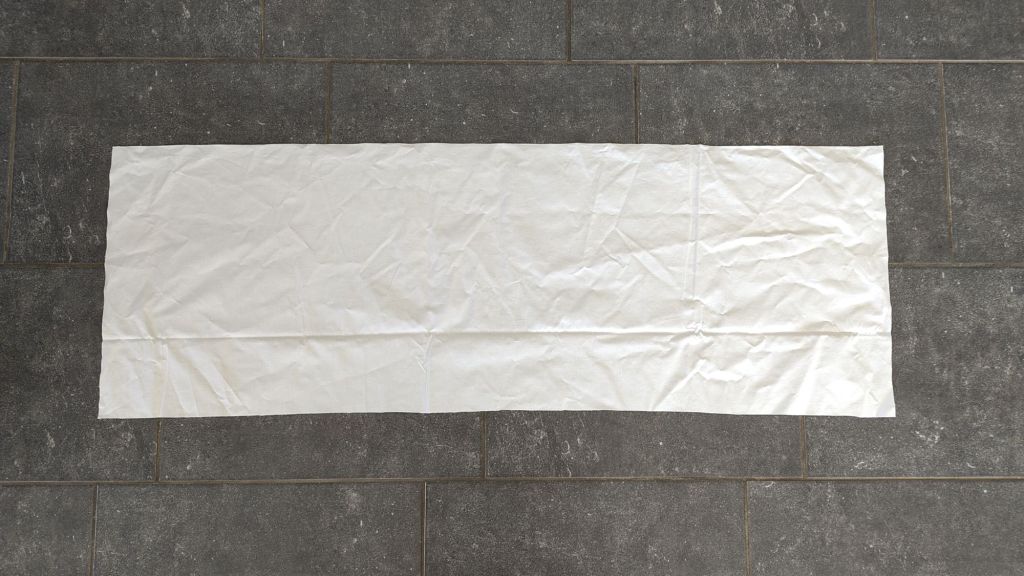
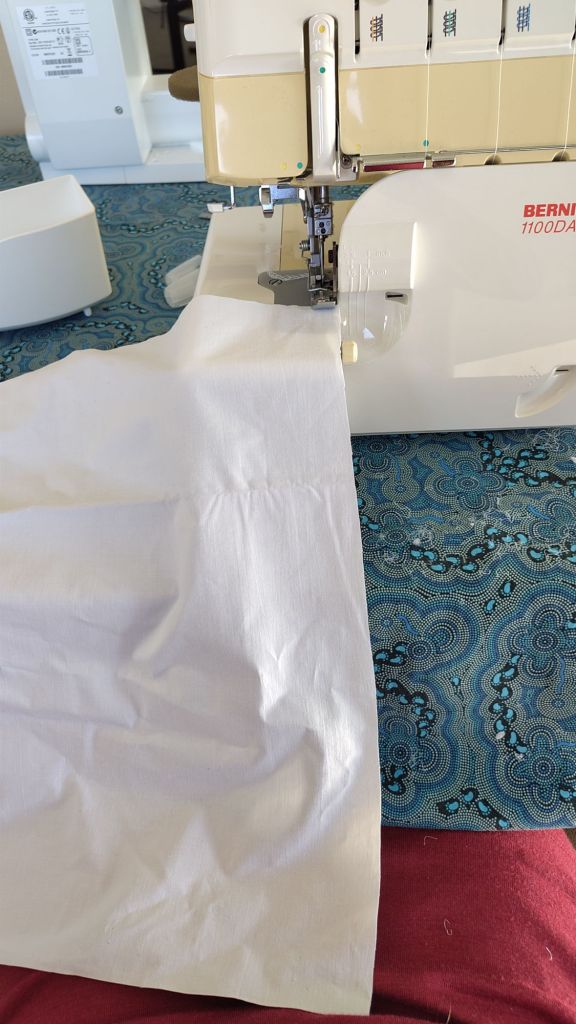
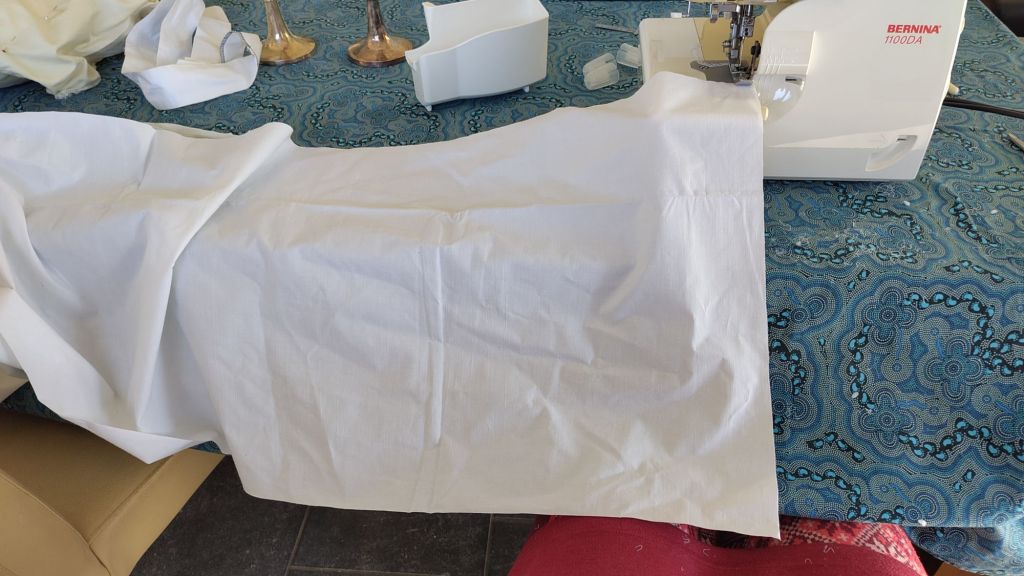
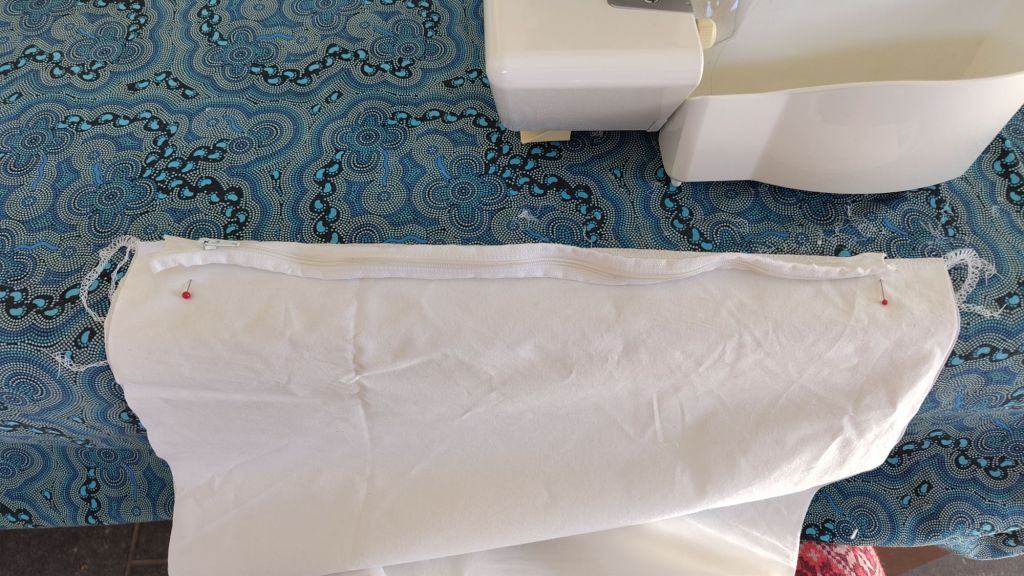
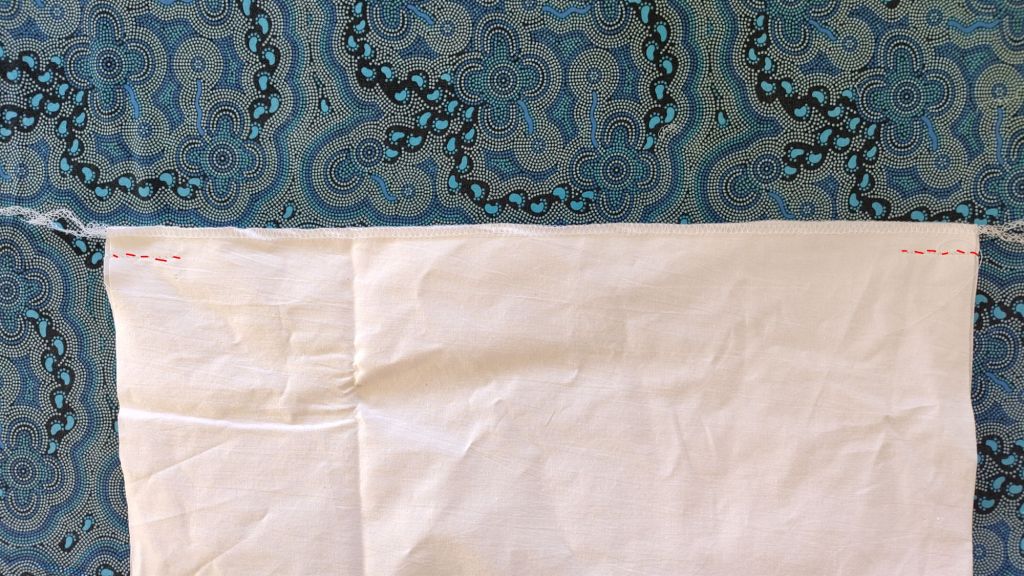
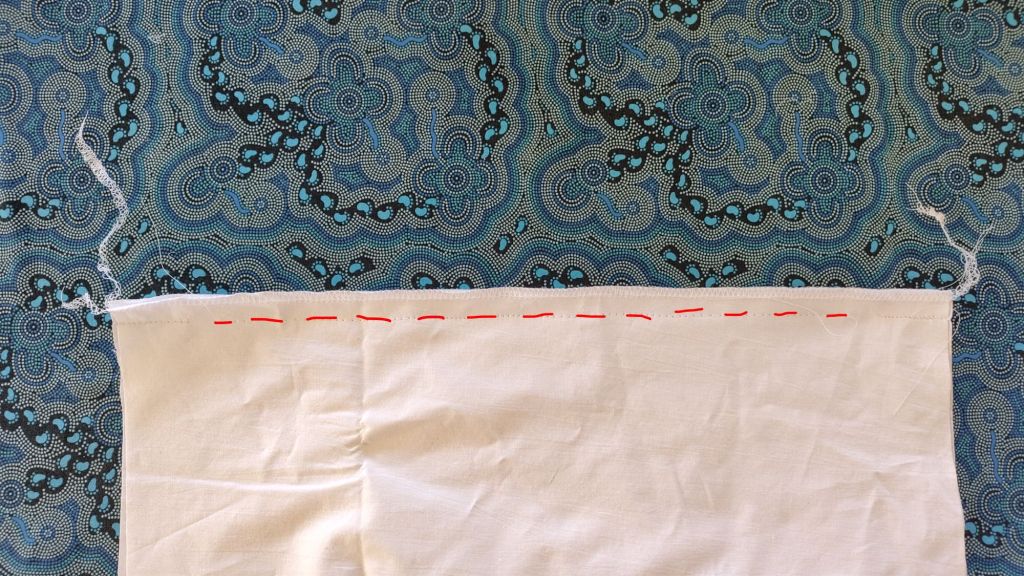
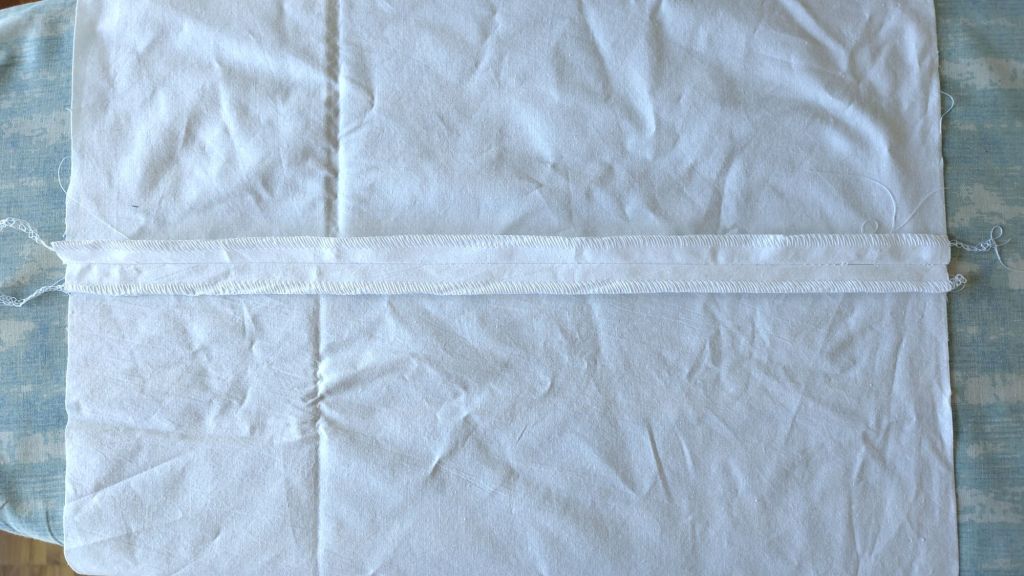
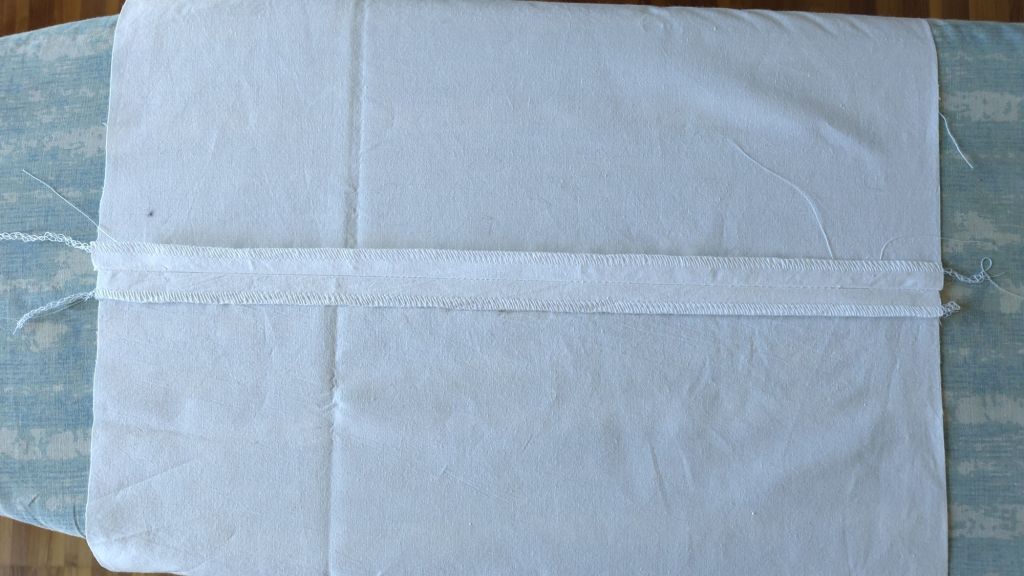
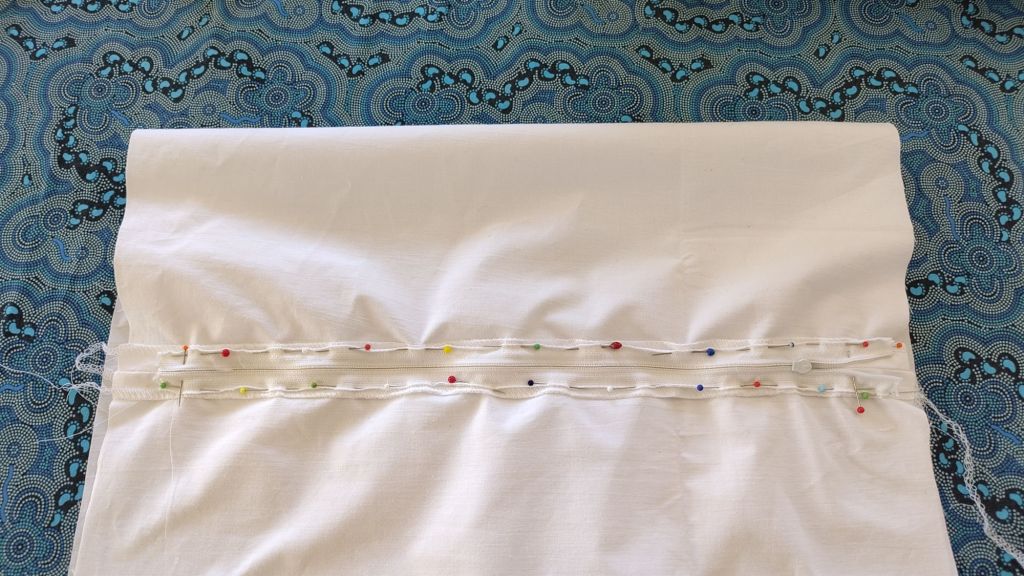
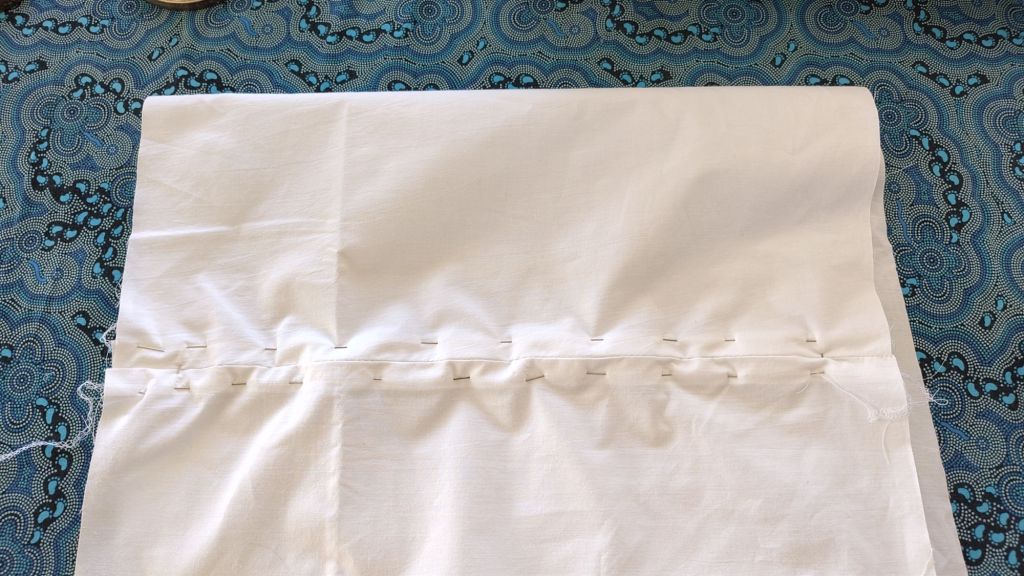
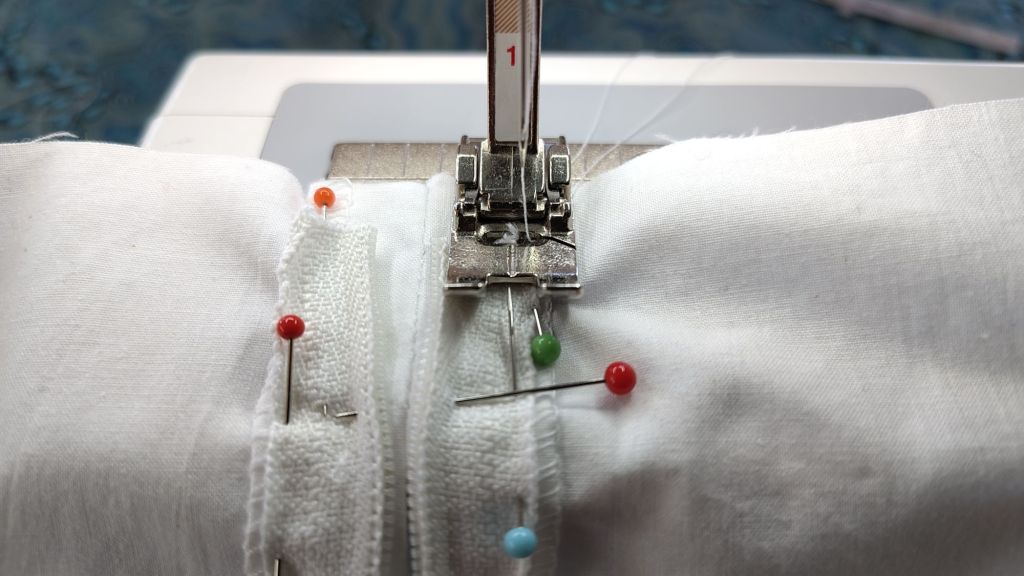
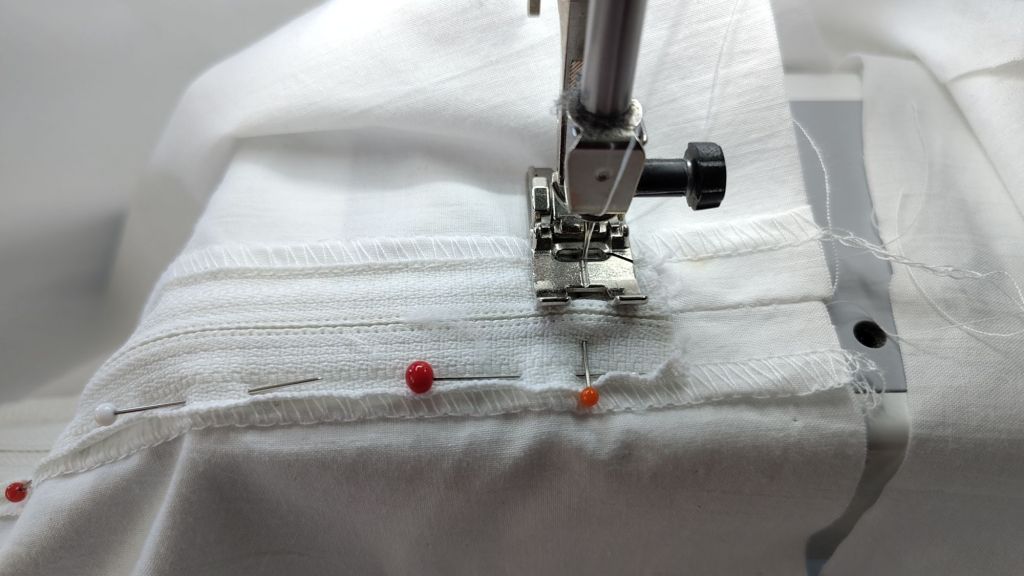
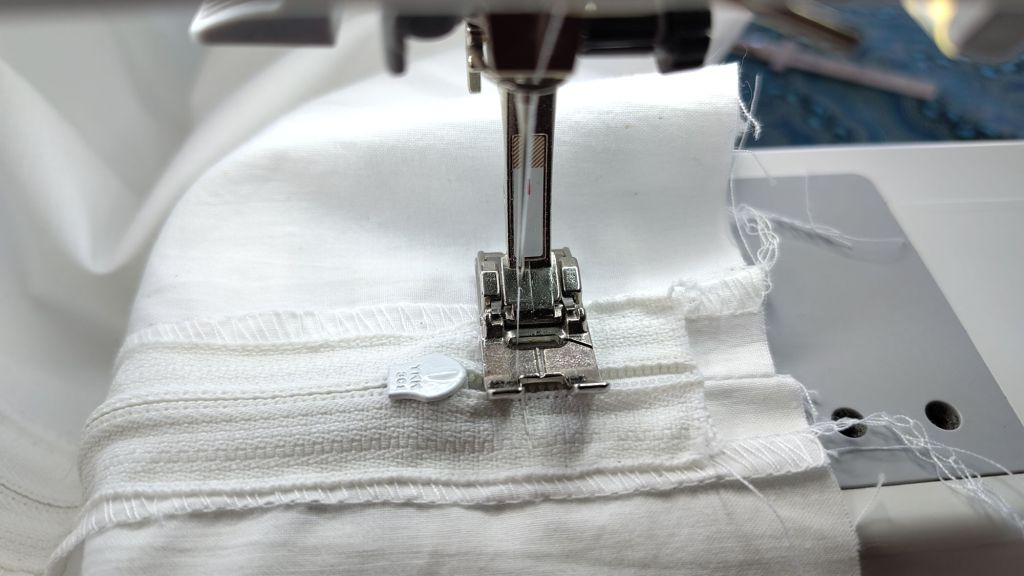
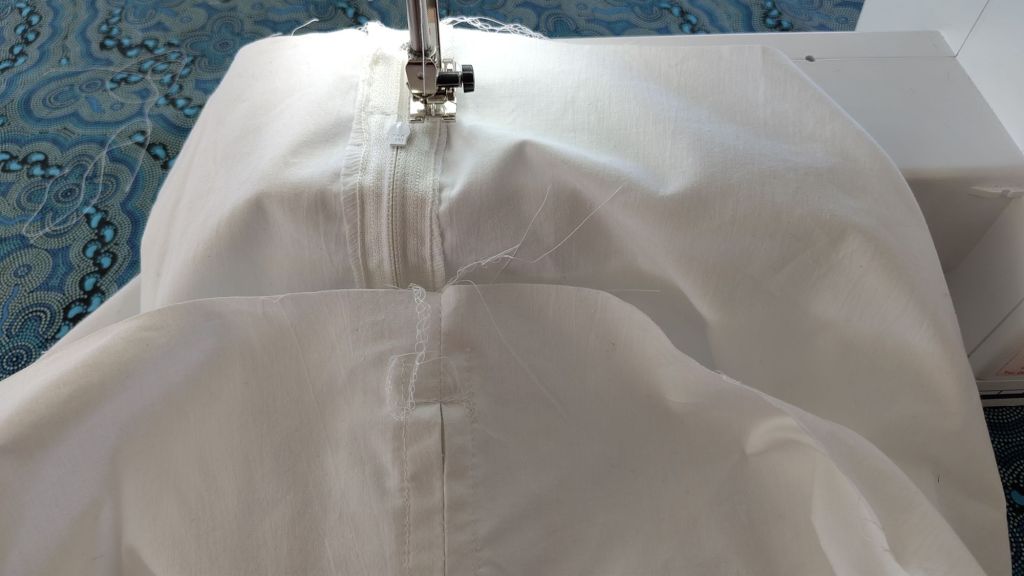
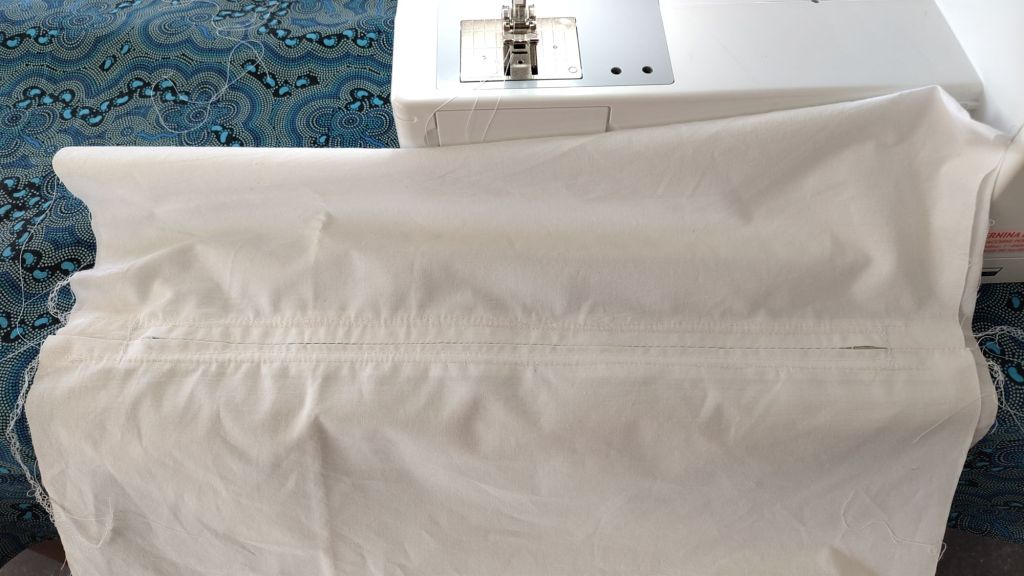
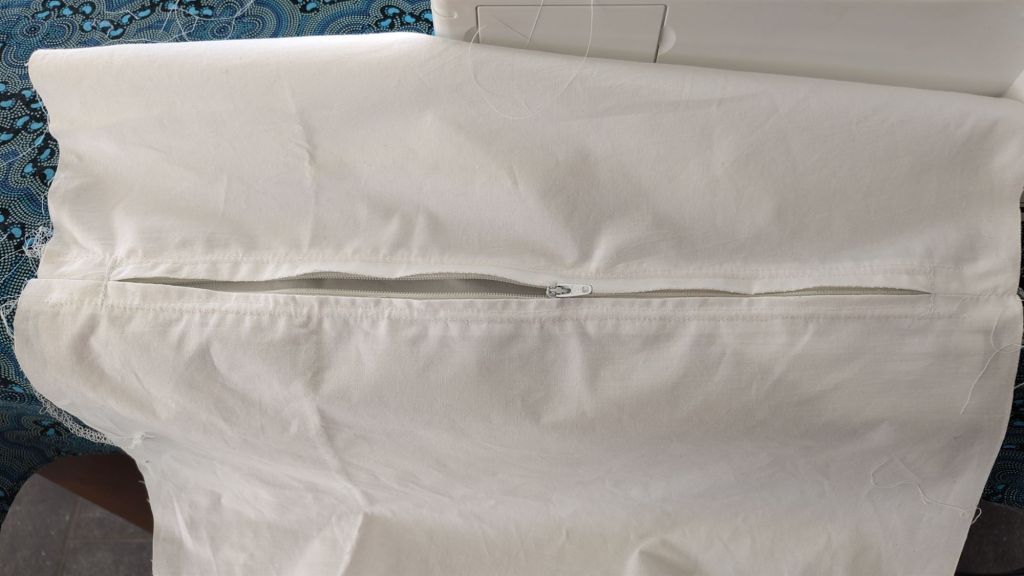
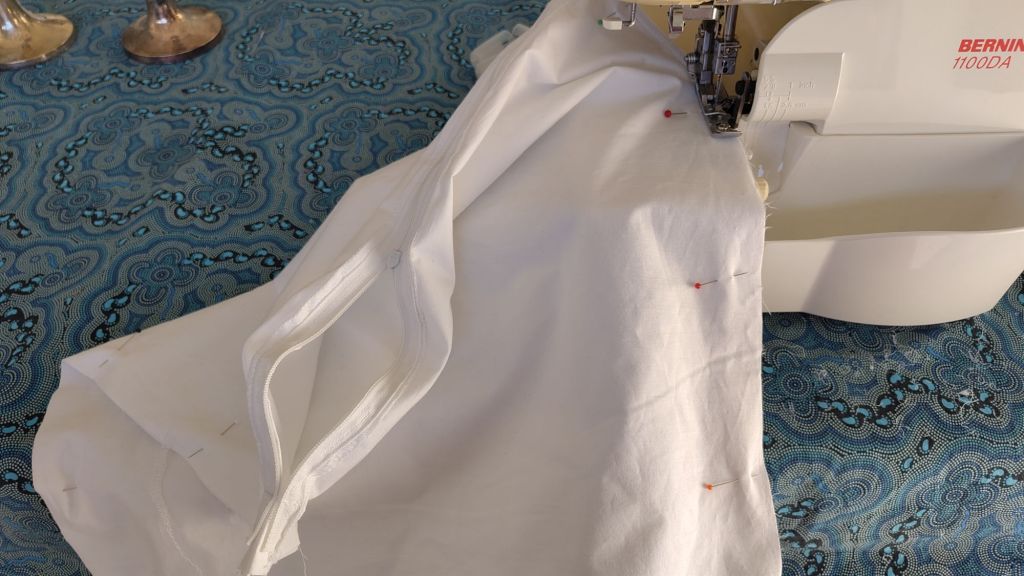
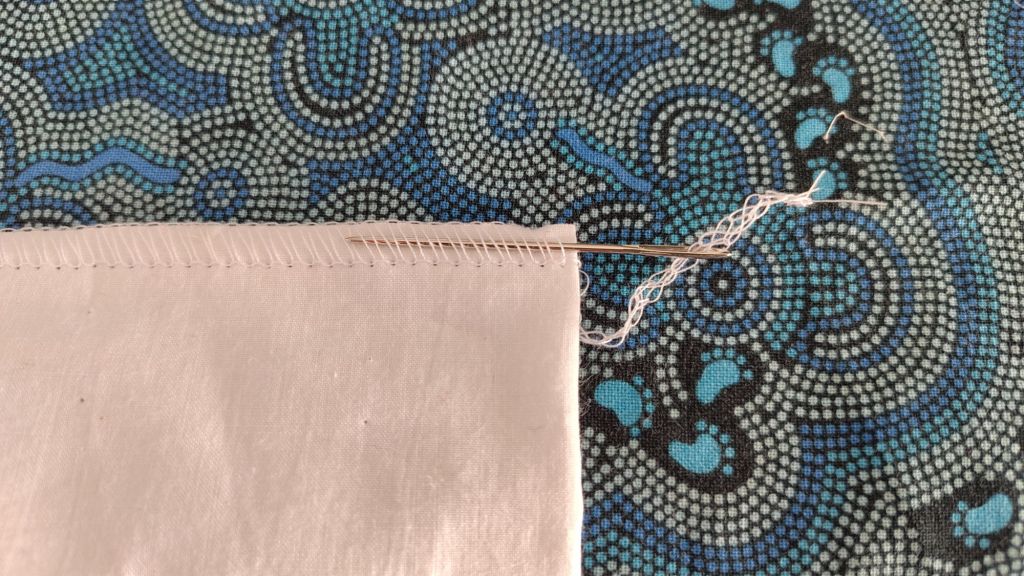
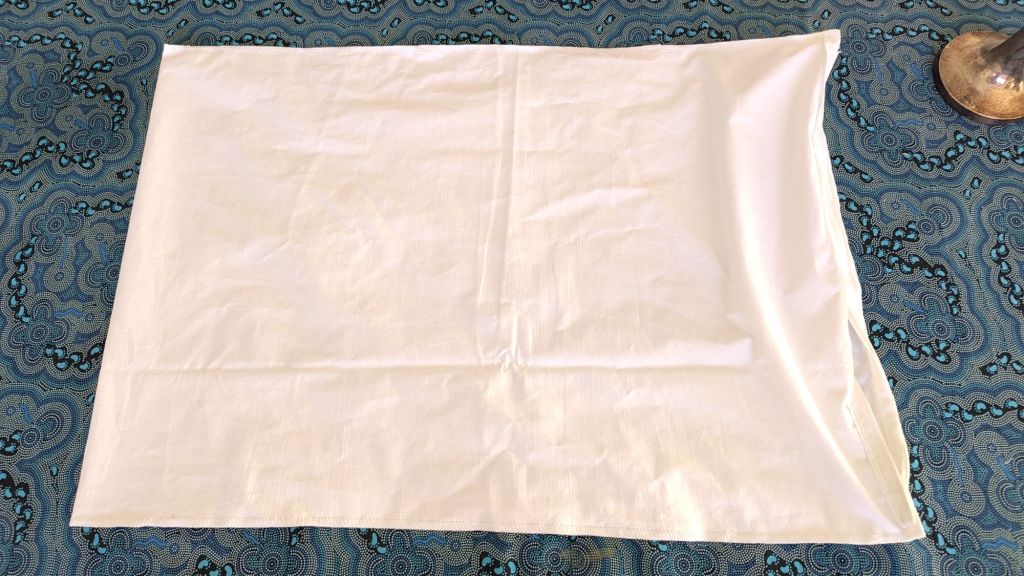
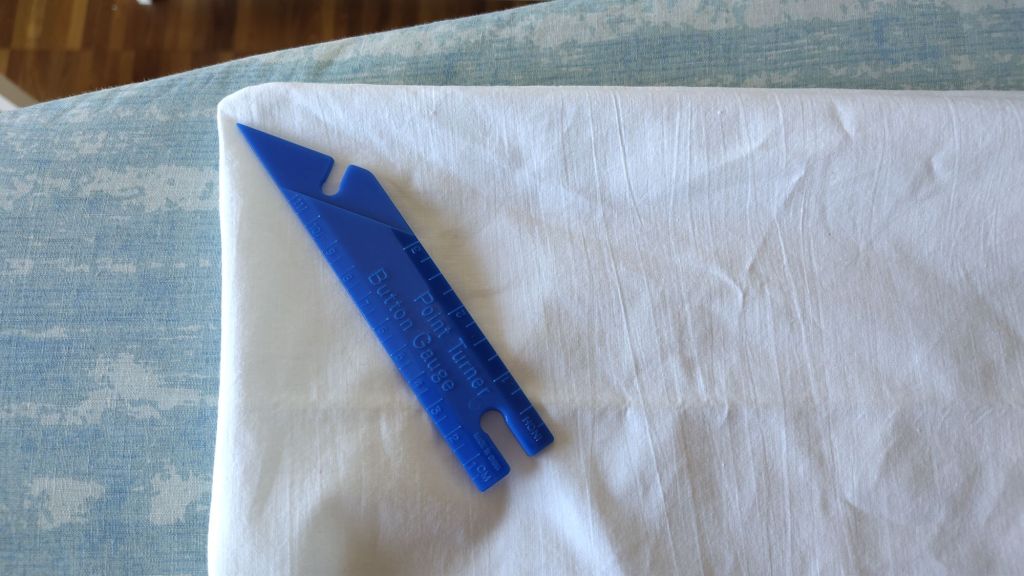
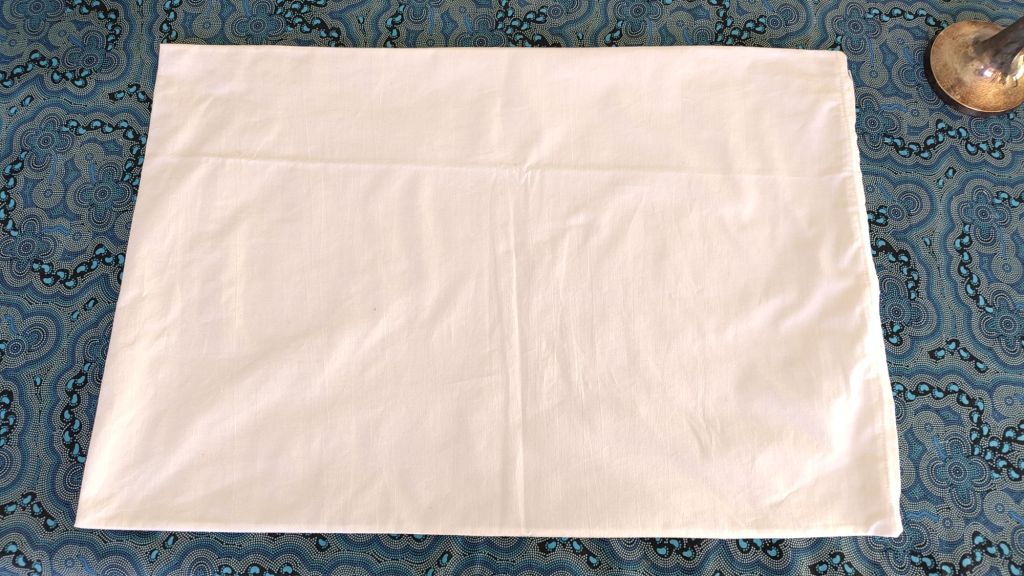
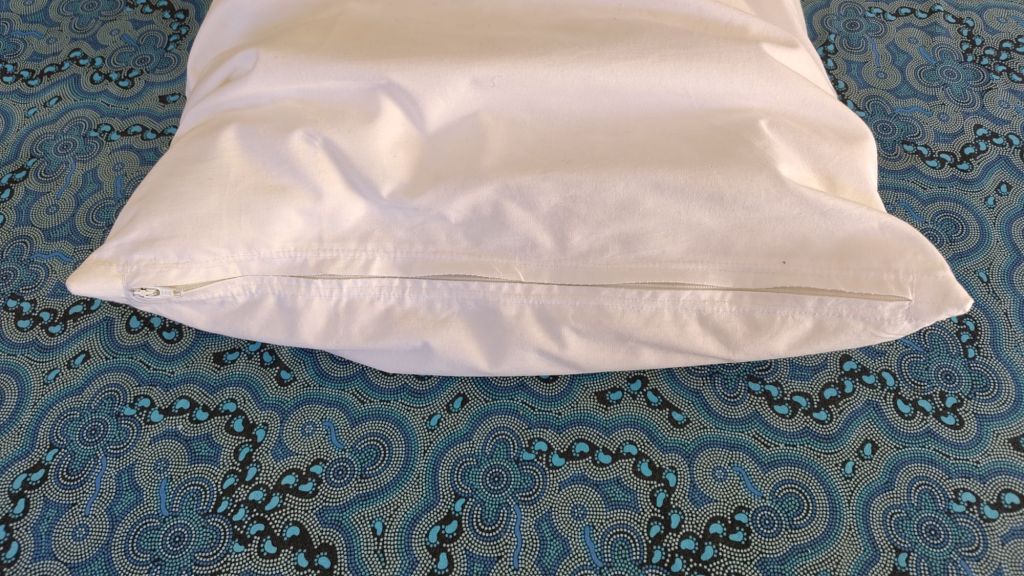
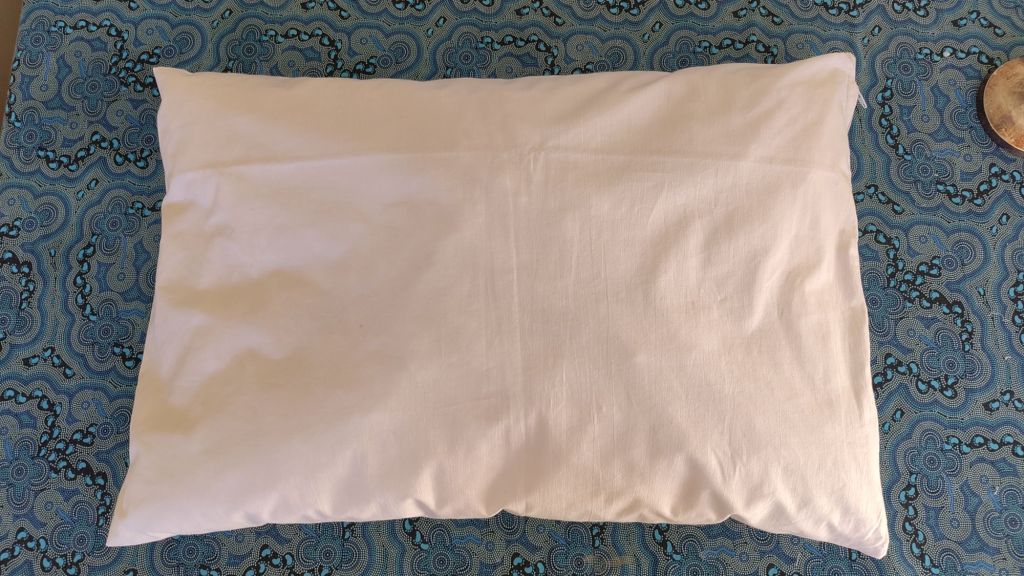
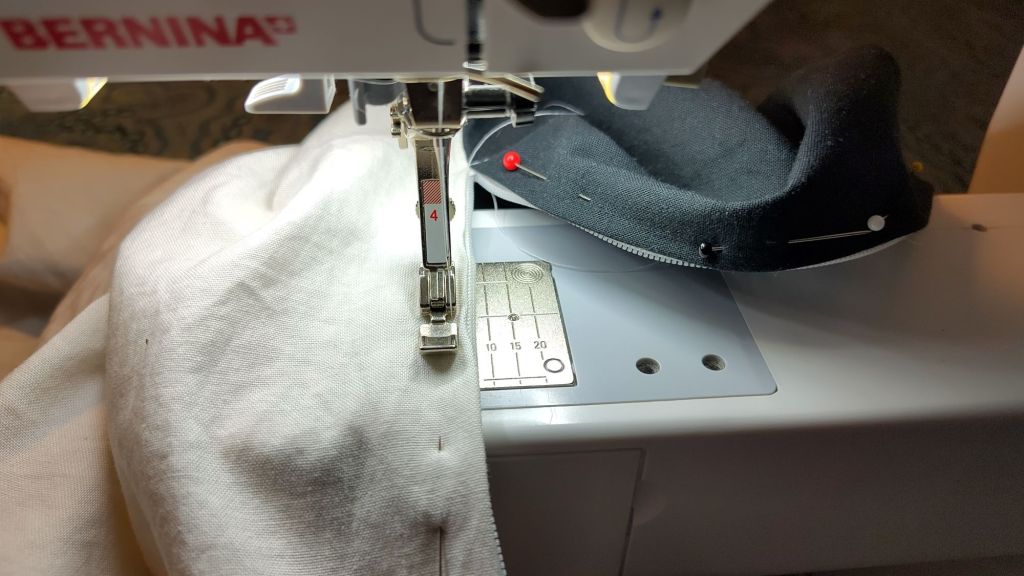
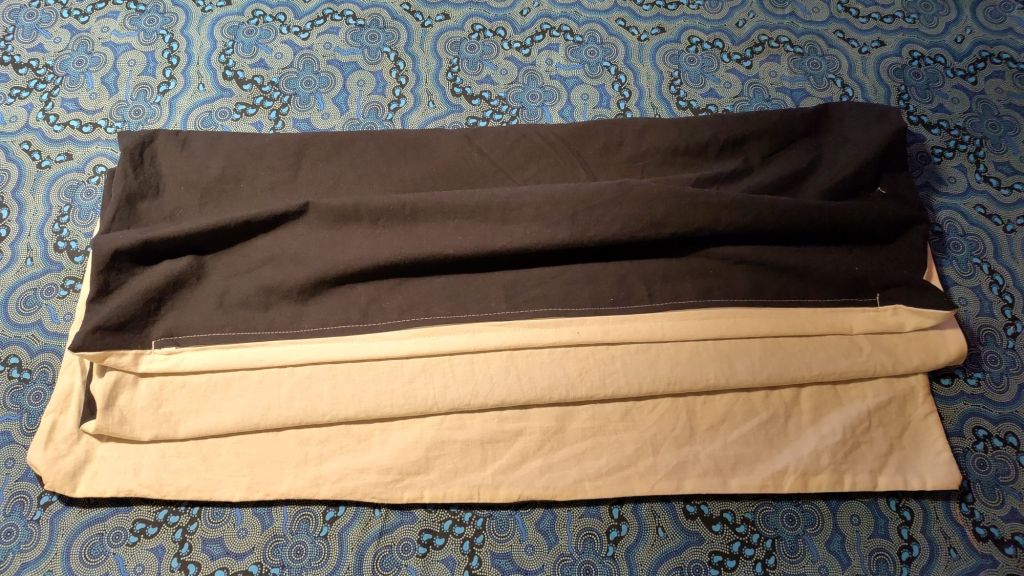
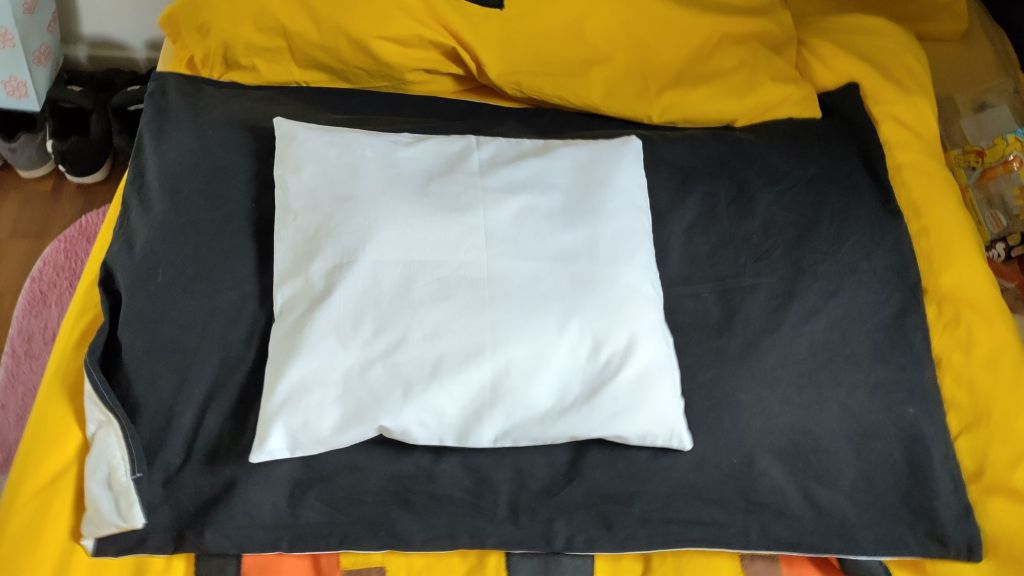
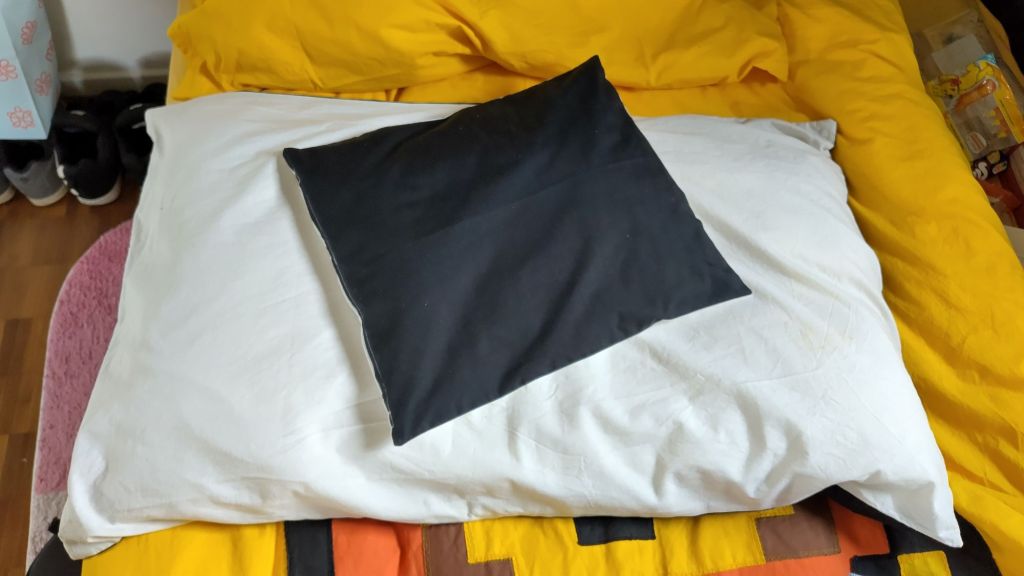
A pillow filled with fluff has a rip that’s not worth fixing as the material is disintegrating. Using the material left over from the physio sheets… cut off a 43*123 cm piece for a 40*60 cm pillowcase.This includes the selvage (1.5 cm on each edge, which was too much for the serged sides so the pillow is slightly wider now).Serge the short ends… right side up. Mark the right side with a safety pin as it’s sometimes difficult to tell.Measure the ends of the usable zipper, leaving a couple of cms of zipper tape. Make the zipper a bit smaller than the whole width so there’s no hard zipper in the outside seam, which causes holes through rubbing.Sew the ends of the material together properly from the sides inward, right sides together, 1.5 cm from the edge.… and baste the middle part with a long stitch that’s easy to remove.This keeps the ends nicely together.Iron it flat. It’s better not to cut off the thread ends as they could unravel and they’ll be cut and sewn over when the sides get serged together.Pin the zipper with the good side down to the wrong side of the pillow fabric. Mark the crossing at the point where the ends were sewn properly together.This is what it looks like on the right side. By not sewing the sides closed first, you can easily turn the fabric inside out… and your sewing machine has easy access. Start with the open, and more difficult end of the zipper. You can use a zipper foot or move the needle.Cross over and back a couple of times as this point will be hit when opening the zipper, after sewing to the end of the zipper and back.Sew across the other end a couple of times.The first pass looks good. Now for the second one, closer to the zipper. Move the zipper tab further down, sew a bit, lift the foot and move the zipper tab up past the sewing foot, and keep sewing. Looks really good!Remove the basted sewing so you can open the zipper. Note how difficult it is to open the zipper from the wrong side.Leaving the zipper half open (so you can turn it inside out again), serge the sides, starting at the zipper endUsing a big needle, tuck the ends of the serger thread into the seam… so even the inside of the pillow looks nice and neat!Iron and push out the corners with a point turnerNice clean cover… with a hidden zipper, bringing the ends together nicely.Filled with fluff from the old pillow (add even more to make it thicker), it can support a sleeping head for decades to come!
To do:
Use a thinner needle for this thick high-thread-count bedsheet material.
Find and use my zipper foot.
Check if other pillows in the house need new cases.
Ensure the tension is set correctly of both the sewing machine and the serger
Measure actual selvage when serging and cut material to size accordingly. The zipper side selvage of 1.5 cm gives a good base on which to sew the zipper but the serged sides don’t have such a wide selvage.
Sew open end of zipper closed for less fiddling
Make sure the seam is opened properly across the zip
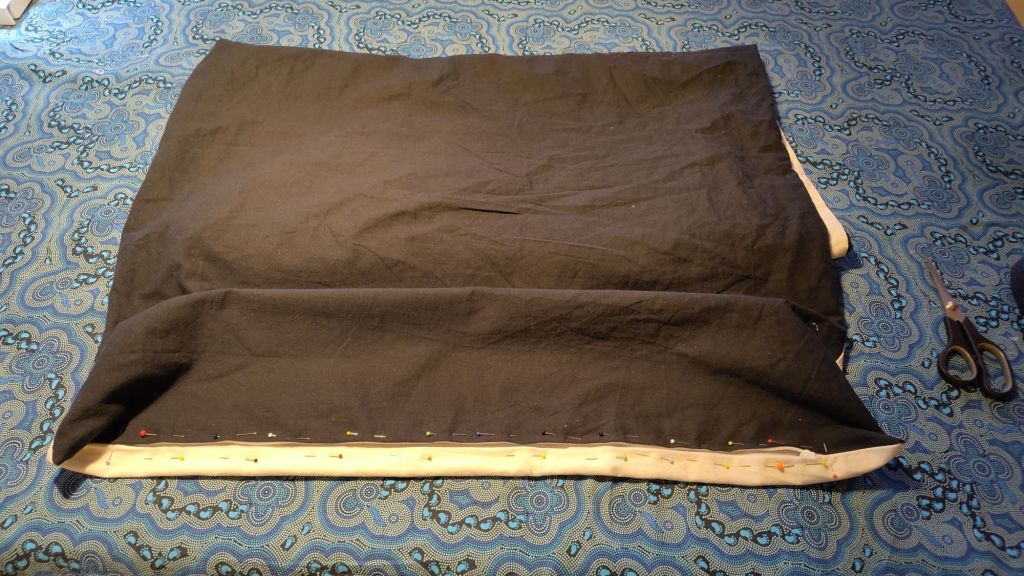
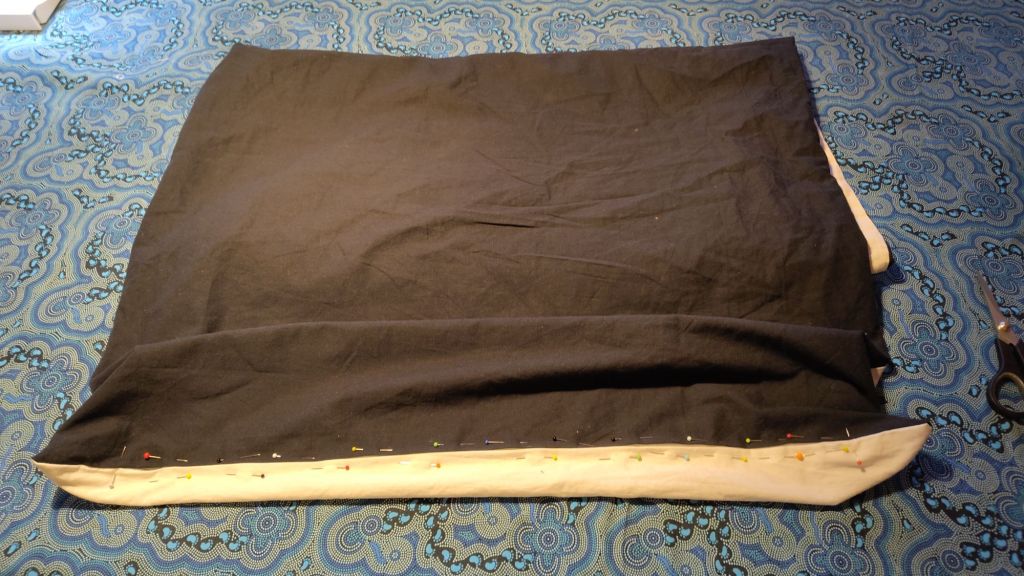
Update: I found a pillowcase that needed a zipper. Since the sides had already been sewn shut, I had to sew the zipper in while it was open.
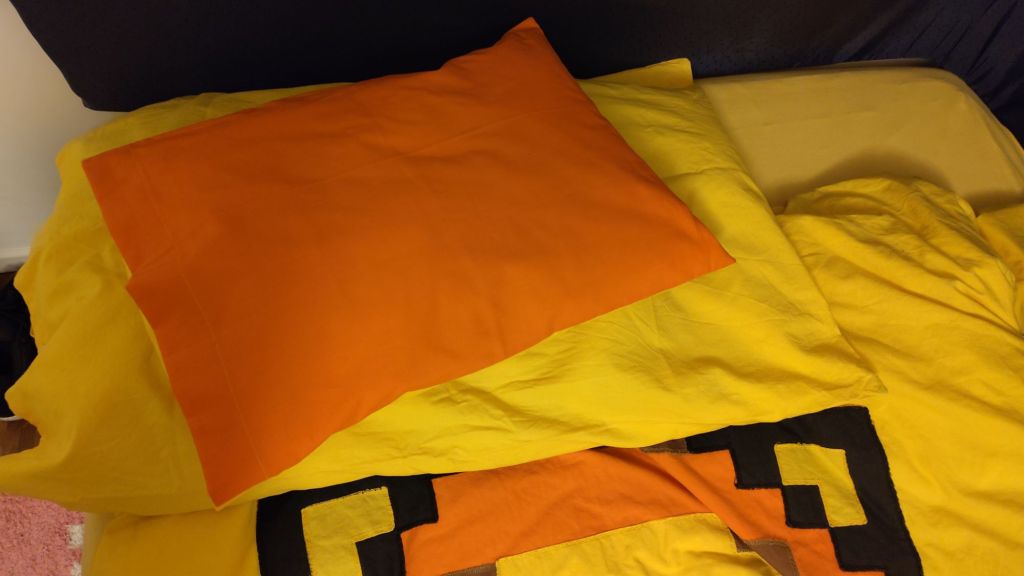
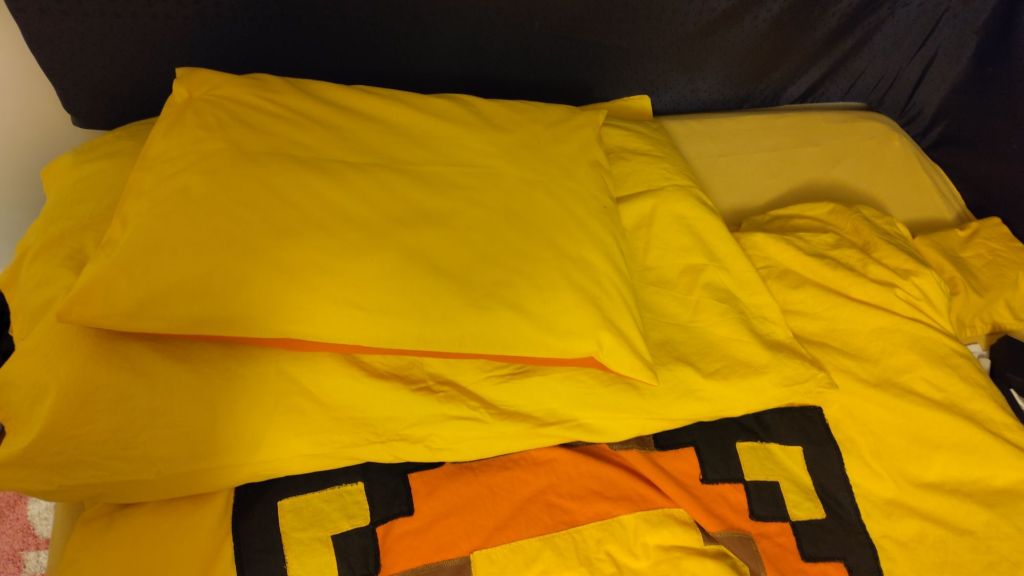
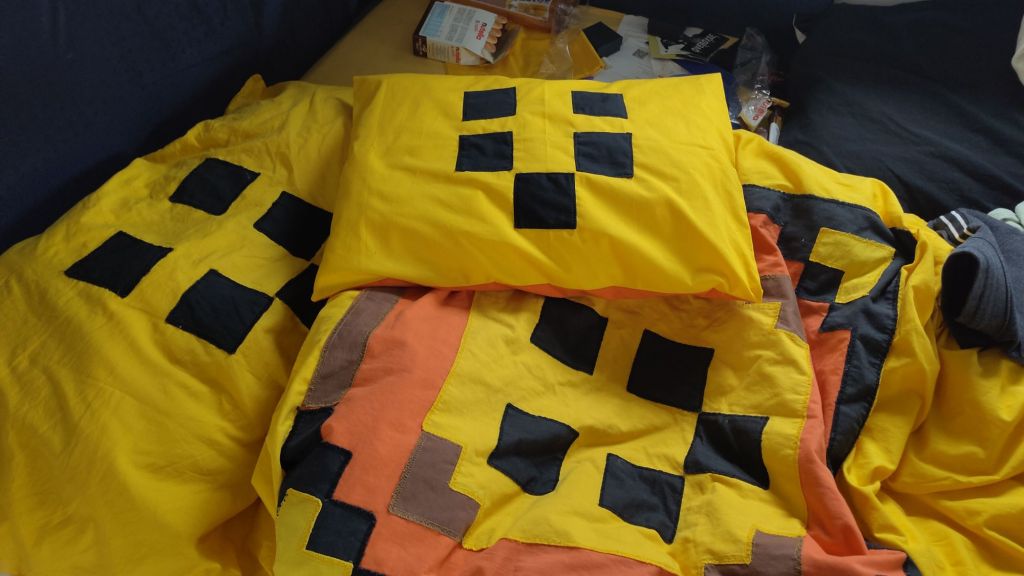
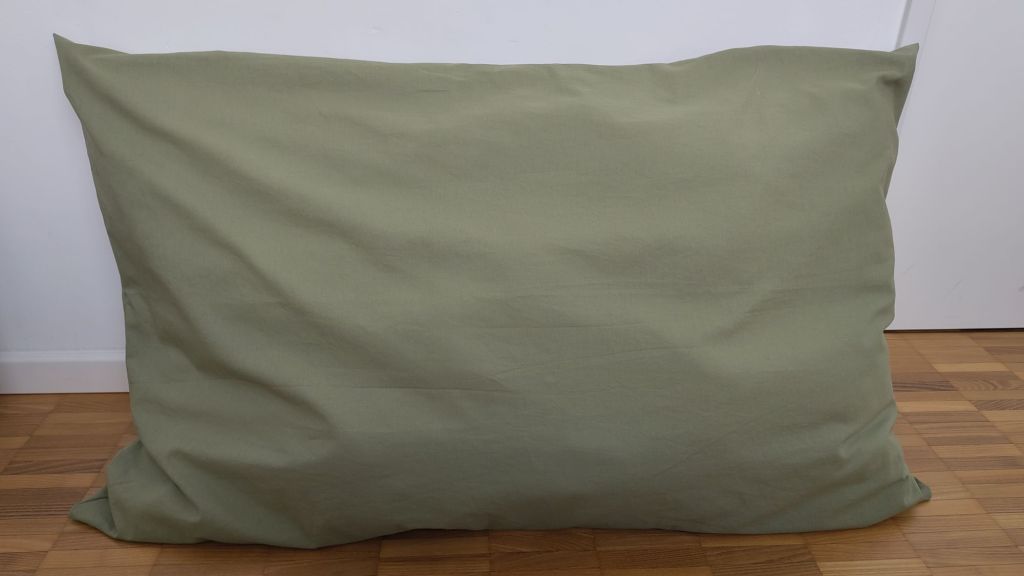
Good pinning is very important to make sure the material meets in the middle and doesn’t move while being sewn.Close the zipper after pinning to check.A zipper foot gives more fine-grained handling.It looks good too!So does… the smaller matching pillow.Orange and yellow, to match the Minecraft duvet covers Aldo sewed 10 years ago.No zipper on this one. Just a folded over openingWith a matching Minecraft face now!And another big pillowcase with a zipper!
 Cool and Interesting
Leave a comment